Being a Black Woman In Corporate America
Over the last week we’ve had many black women share their personal stories of their experience being the only black woman or black person in the workplace. The mental and emotional exhaustion it takes to show up to work in spite of never seeing people who look like you is an act of bravery in and of itself. Many times, these same groups of individuals find themselves in conflict with their employees and direct reports, namely for not conforming to the culture in the company. It is masked with comments on their work performance which is code for we are uncomfortable with your blackness. Stress, sleepless nights, anger, paranoia are the feelings that black women feel at work on a constant basis. It feels like the walls cave in when it becomes crystal clear that there is no one to advocate for you.
We heard from five black women about their personal stories of the professional microaggressions that they have experienced in the workplace and the psychological trauma that they have experienced that has caused them to walk on eggshells. They all spoke under anonymity and the goal was to give people an idea of what it means to be a black woman in corporate America. Read their stories below.
We were having an annual meeting to go over goals and objectives for the year, but also to do a semi-anonymous review of our boss and company with Human Resources. Everybody needed to verbally shout out something that they wanted the company to address. I raised my hand and I said, “As I look around the room, I am surrounded by 8 men and I am the only black person and woman on the team. What is the company’s goals to tackle diversity?” When I asked that, I felt the room energy go low. I thought to myself, how many WoC would even be brave enough to ask this sort of question. I’m guessing next to zero as they would be afraid of losing their job in lieu of looking like a troublemaker. As the HR personnel acknowledged my question, my white colleague with folded arms piped in and said, “Look, I get the whole diversity thing, but I grew up below the poverty-line. I had struggle.” It was then that I knew there are so many white males like him who don’t get it. Whether you grew up poor, in a single mother household or whatever your struggle is, you still benefit directly and indirectly from being white.
I wish people knew how overly self-conscious I am about the way that I look – my appearance. For instance, I have to go to Amsterdam at the end of the week for a client meeting and I’m like, should I take my braids out? I’m overly, overly sensitive with the way I use my tone in a meeting or the way I address a colleague because I never want anybody to say, “Yup, I knew she was THAT PERSON and I’ve just been waiting for that moment for it to come out of her.” It’s so much work doing that and people don’t understand how THAT, on top of the daily duties that I have as just an Account Director, is a lot. They don’t think about it. I wish people knew that there is a lot of stress and pressure in this role to be this person and exude this type of attitude and it’s a lot. People just walk in and out and have an attitude with you one day and put their stress on you and never think for one minute, “How does it feel for her to be the only person in the room who looks like this?”
I was caught off guard at work today when I was called into my Manager’s office. It was her and the owner of the company. No HR was present; just them. They handed me a PIP (Performance Improvement Plan). I was shocked as I had never had a prior conversation over concerns about my performance. They said that I was doing great with the job tasks, but that other colleagues felt uncomfortable around me. So they tailored the PIP with job-related tasks centered around my interactions with my colleagues. I am so confused. I walk in and I am perky and nice to my colleagues because I know that I am the other black person working there and I want to make them more comfortable. Now, I don’t know what to do: do I look for another job? I need this job. I guess I just need to go into work and act more white.
I work with a bunch of white males. If I could describe their style, they are like bros; stereotypical frat guys. They all congregate together and harass me for being reserved and quiet. When black people keep to themselves in predominantly white-majority workplaces, white people at work get uncomfortable. It came to the point where even my boss (who is white) was micromanaging me for no reason. I was getting the work done. One day, I got called into the office and my Manager had HR in the room. They said that it was my last day because my work performance isn’t where they expected. I was in shock. Concerns of my work performance had NEVER been brought up in the past nor was I ever given a PIP. When I first got the job, it was a requirement to sign paperwork saying that I could never sue the company. I am still going to file a discrimination case.
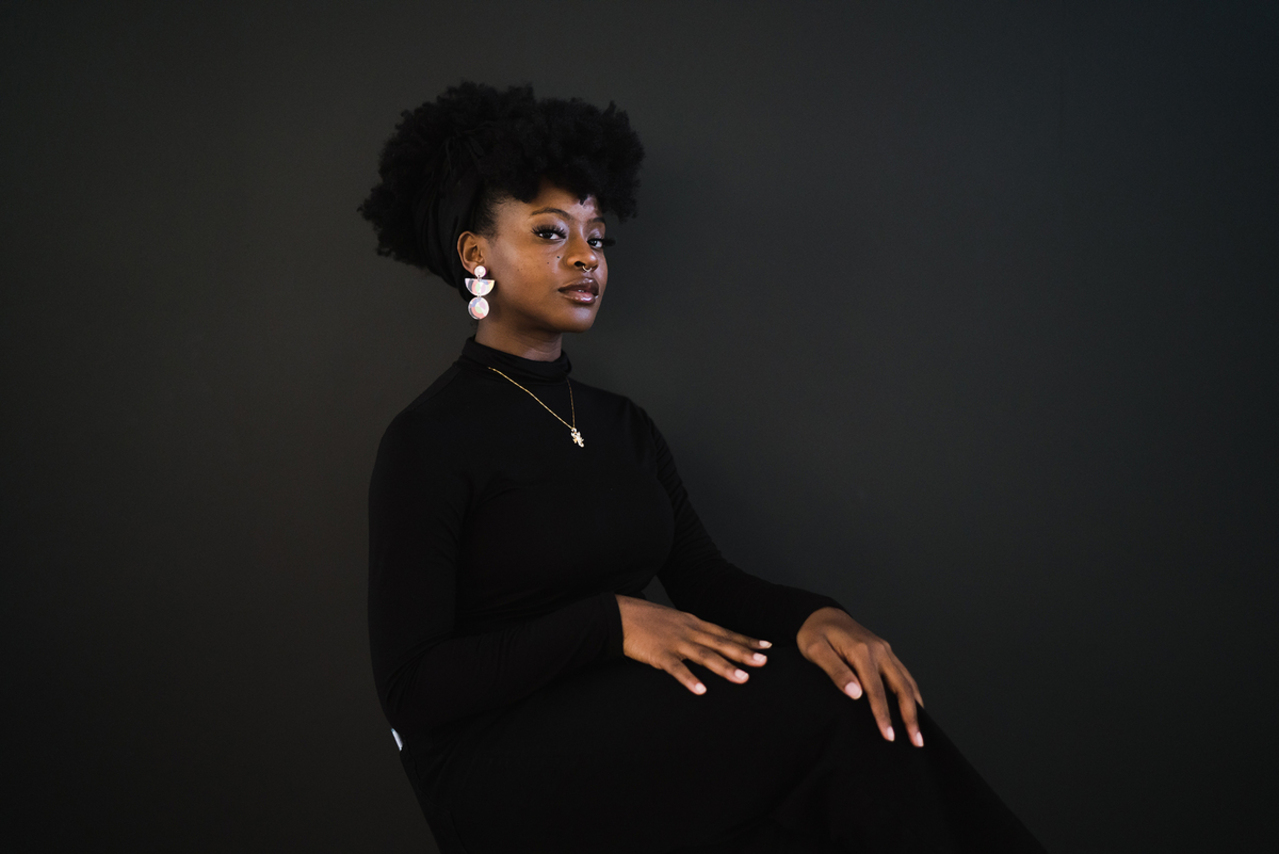
For Ishea Brown, she preferred to not speak on anonymity. "I think it's important to sometimes put names and faces with these types of things," she shared. Read her perspective below!
There is pressure, fear and a self-induced responsibility to speak up when others in the room who look like you are not there. I know that that is not fair and not something that everyone feels. Recently at work, I had an instance where our company was discussing metrics around diversity, inclusion and hiring initiatives and I challenged what was being said. After the meeting, a lot of people came up to me and slacked me and were telling me that I had done a good job, and that I was brave, and they supported me and they encouraged me. While I genuinely appreciated (and was shocked and surprised by) all of the support, I went home and told my fiancé that it stuck with me that in the moment, no one in the room said anything in the meeting. I have been burned in the past being the voice that speaks out and I have learned the hard way that people will gas you up and tell you to say all of the things and then not take the Ls (and Ws) with you. It’s often my non-Black employees who encourage me to speak out because they know that I am outspoken and really want me to speak on things that end up benefitting them. But, when it comes down to it, they will leave you out there looking crazy. I have been labeled the “angry black woman” or the girl who is always bringing up what is happening. I struggle with not calling out things and giving voice to it. I have learned to pick and choose my battles.
If you are a black woman in corporate America or any corporate setting around the world, how have your experiences been? If you are a non-Black person in the corporate setting, what is your take on this topic? Share with us below!