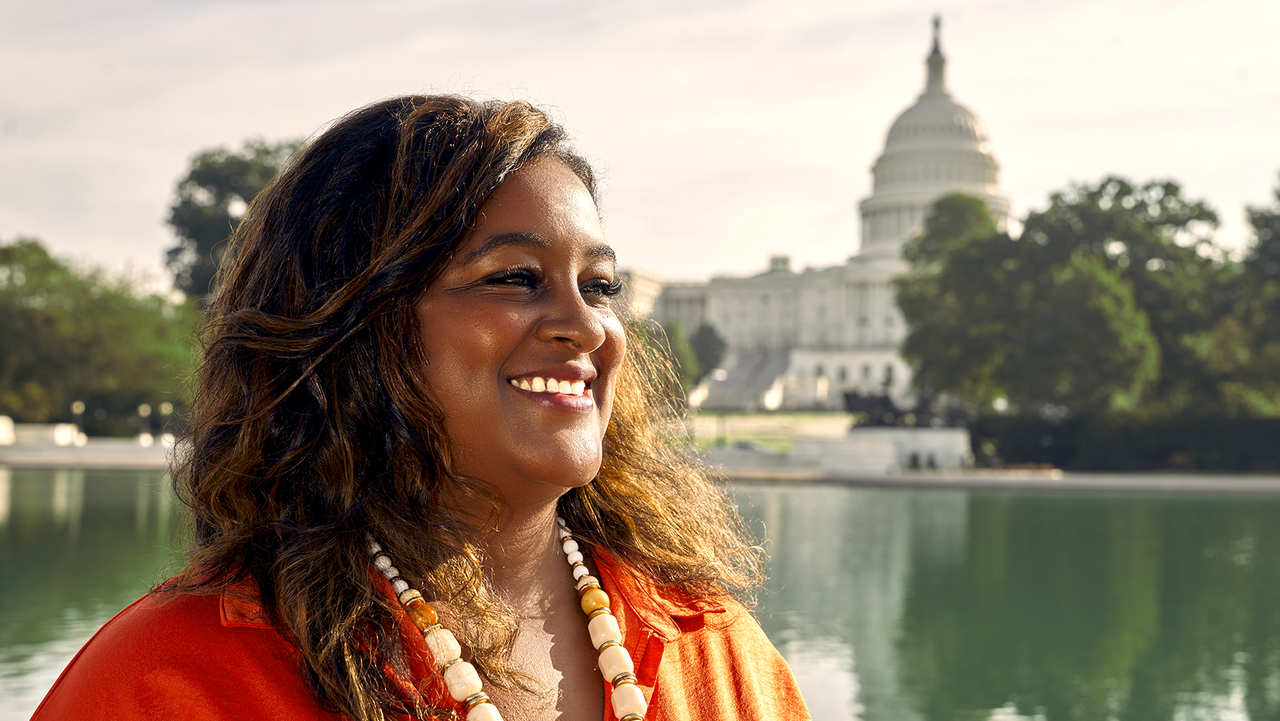
Black Women in Tech: Chanelle Hardy
In honor of the Black Women Techmakers Video Project with Google, we sat down with 6 incredible Black all stars. Each bringing a valuable perspective in the tech, art, engineering and/or entrepreneurial space to build a more equitable future. All of the conversations focused on the theme of intuition and intentionality, through the lens of their individual experiences. We know that Black women are powerful and valuable as they are in society and together with Google we wanted to highlight the uniqueness of each of these changemakers in the tech space and beyond.
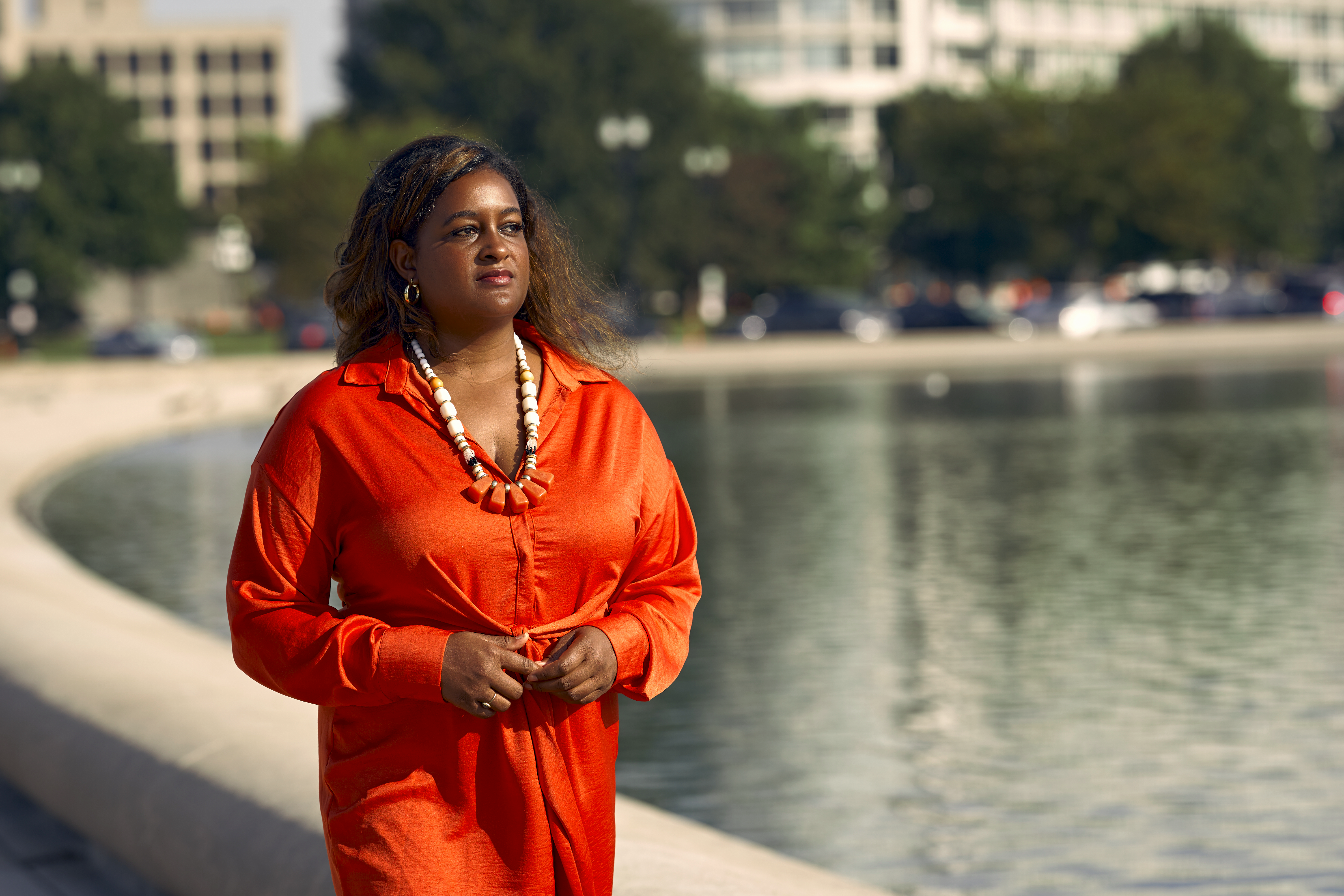
As the Head of Civil Rights at Google, Chanelle Hardy comes with a strong résumé filled with expertise in law, public policy and advocacy. The setting of her interview with TONL Co Founder, Karen Okonkwo, is in her office in D.C. a district where she spent many years strengthening her work. Read about her upbringing just outside of D.C., how that shaped her, what people of color can do to have more agency in the digital age and what fuels her.
Karen: I had read that you grew up in DC, but you said that you kind of described it as like a 1950s neighborhood. So I'm assuming a lot of segregation, a lot of racism and discrimination. I also grew up in a predominantly white neighborhood. Probably not quite like yours. So I'm just curious: what was it like growing up as a young, Black girl in DC?
Chanelle: I live near DC now, but I grew up in the Maryland suburbs and in a small town and it was really great and half really crazy. So the great half was we moved there because it was closer to my dad's job. And it was a classic ‘wide open spaces’ kind of quiet suburb where my three sisters and I could deliver the local, weekly newspaper.
Because we were “papergirls” everybody knew us. There was a great public library that was within walking distance that we went to almost every day. It was just kind of a safe, easy childhood in terms of our physical safety. I had never experienced ,until I went to college, going into a store and having a security guard follow me around. The first time it happened was like, “ooooooooh, this is how they treat Black people.” The part that I didn't like was the school experience . The public school we went to for like a year and a half was pretty old school racist. When my dad was enrolling us there they said, “We pride ourselves on our low minority enrollment”. Of course I didn’t know that as a kid, but I did know that my teacher was hostile - lots of bad memories. Later my mother actually asked the principal if race could be explaining the problems my sisters and I were having, he said, “yeah, probably.”
There were tough conversations and my parents decided to homeschool us - which actually turned out to be great, even if the circumstances that led to it weren’t.
And then also, there was a lot of just racist stuff that you would hope people would say to your face today, but I find nothing really changes too much. Kids would say all the time, “My Mother is smarter than your Mother, because my Mother's white and your Mother's Black.” Or, “My mother says that Black people stink.” Or you know, just all kinds of any racist thing, like people would just say without any discomfort. So I felt like I spent a lot of my childhood with what we now call ‘respectability politics’. “Well, you know, it's good for them to meet you because then they'll see that Black People aren't really stinky. And Black people are nice and smart.” That was a lot of responsibility to feel like I had as a kid, especially because the older I've gotten I'm like that doesn't really necessarily change people's minds. That effort I don't know is really effort well-spent.
So for me as a woman, I read Nikki Giovanni’s “Revolutionary Dreams”. I got free. I grew out my natural hair. I am in a world with a lot of Black and multicultural spaces, but other than work, I'm not in a lot of white spaces.
Karen: Right. And so how do you think that that experience growing up in that environment shaped and helped to catapult you into the career and just the trajectory that you're in right now?
Chanelle: My parents were really good about impressing on us a love for our community, our people, our culture and ourselves. For us, my mother was very intentional. She would say “ I love your brown skin because brown skin women…YOU KNOW!.” It was a long time before Beyoncé’s song, haha! She did a really great job with that. So even though we lived in this white community, we felt really Black, like proudly Black. Being homeschooled, it gave me the freedom to do a ton of reading and research and learning experiences. So by the time I got to college, I had read all the curriculum for African-American studies and all that kind of stuff.
I remember in high school with white friends being super irritated by me talking about W.E.B DuBois and Booker T Washington and Malcolm X and, you know, they were like “Well, you’re doing fine. I don't understand what your issues are” and all that stuff. Then, of course we did a lot of community service. We definitely spent time with our people. My mother's family is from rural Virginia where my great grandmother didn't have indoor plumbing.
We experienced friends who were in DC (before DC was cool again) and some of the things that they went through. So I definitely had both the actual experience of knowing and loving people that I saw getting what I thought was an unfair deal and having read about our troubled history about this and I was wrestling with that as a kid. So definitely by the time that I became an adult, while I didn't know that I would go into policy or politics,
I think everybody who knew me knew I was going to do something that had to do with equity and justice.
Karen: Yeah, that's amazing. I commend your family for instilling just the teachings of Black history to you, because for me, I'm a first generation Nigerian. So you have parents who are trying to assimilate, you know, let alone learn about Black history. And so I feel like in the household, I didn't get that. And then you know, I for sure didn't get that in my schooling. So when I'm hearing all of these horrible things and good things too when it comes to Black history, I didn't learn any of that until I was honestly out of college.
So I think that's incredible that you were able to have that instilled in you and I'm sure that that was what you kind of wore as like your badge of honor. Because for me, my badge of honor is that I'm Nigerian. I love that I can say that I know where I'm from in Nigeria, which is a luxury I know that many Black people cannot have. So I relate to you in that sense. So thanks for sharing that.
Chanelle: I just wanted to say real quick, just when you talk about being Nigerian - that one of the things that I think that they [parents] did (even though my parents hadn't spent any time in Africa) is that part of teaching us to love ourselves and our community was that where we came from had to NOT be what they were showing us on TV and telling us in the history books because they don’t even do a good job on speaking about Africa, right? So, in 2018, I finally got to go over there with my siblings and it was just great.
Karen: That is so great!
So when it comes to how you leveraged your understanding of Black history to really get into what we call tech policy, I know you had a background also in working for the Obama administration. When you think about why you went into that space, what was your biggest pull? What would you say has been your biggest, “why” in getting into that sector of work?
Chanelle: When I was thinking about my “why” what I was thinking about is I hate the word diversity, but I haven't thought of a better word yet. I'm going to think of one eventually because I really am actually deeply passionate about kind of the amazingness and beauty of humanity, especially those of us who don't get celebrated and uplifted in our culture here in the U.S. I believe that it's not just that your life is just richer [with diversity], but I actually believe that diversity is strength.
I believe that equity is an important step on the way to justice. I just believe that if we bring all the experts and the leaders and the thinkers, regardless of their background, or I should say in tech, ESPECIALLY because of their backgrounds, that's how we're going to develop the types of policies that are going to really make life better for us.
Once I kind of stumbled into policy and telecom and tech as a set of issues where our community and voice were underrepresented, but where we are totally overrepresented in terms of driving where it goes and how it's used, I just have been committed to making sure that the table is available. Making sure that I pull out seats for people to come and help to make it work for us because as we think about things like everything from all the content creation and the citizen journalism and the advocacy and organizing that happens online that our communities of color are leading, we're not as closely paying attention to the infrastructure and the boring policy conversations that are underlying all of that stuff. And frankly, the business conversations that are underlying all of that stuff.
So you look at everything from us being smacked in the face with our digital future at the beginning of the epidemic and people not being able to do anything because they didn't have at home internet. I hadn't realized it was crucial. All the way to now trying to decide what the rules are going to be around companies like mine [such as] how big are we going to allow it to be? What are the rules going to be for how we communicate online? It's really critical that we all participate.
Karen: I agree. I feel like the term tech policy can create maybe a lot of levels of confusion for people. So can you give me an example from start to finish of a proposed policy, how that comes into play and an example of a moment in your life where you've seen an actual policy be implemented and its impact?
Chanelle: It's always so hard to say because the major telecom bill was written in 1996 and hasn't been updated since then. But, I would say an example that I feel like folks would relate to is the point that I was talking about with folks not being online.
There's been conversation for years about how we help people that can't afford it [internet]. There've been a number of strategies to try to get there. One that I got to work on when I was at the federal communications commission working for Mignon Clyburn (a Black woman) was our universal service fund, which people don't think about. It's a tax on your phone bill. What it does is it allows people who can't afford it, free phones. So you think about if you're needing government benefits to survive, one of the benefits you can get is a phone because we recognize that you need to have a phone to survive. One of the things we worked on is saying nowadays it may not be actually just the phone; it may be the internet. So we work to make sure that on the internet, you could use your benefit for internet service as well as phone service. So that's one thing at the FCC. Now the work that has been done is around the emergency broadband benefit where there's a subsidy. If you can't afford at-home internet, you can get a subsidy for it from the government so that you can get online. And that's something, a lot of the groups that I work with are really focused on, because right now there are 6 million households (that was a number I just heard) that have been connected since this program rolled out. There are so many people who are eligible, who don't know about it yet, and haven't signed up. Just kind of like that eviction moratorium and folks getting evicted and not knowing there's money available.
So that's one [tech policy] that folks might relate to.
Karen: Thank you. I appreciate you breaking that down because I think a lot of people don't understand how much control they have over the access they have and the way that they're being communicated to when it comes to the internet.
Karen: What advice do you have when it comes to marginalized groups taking more ownership over how the internet serves them? What are some things that we can do in our own realm, whether it's at our own corporate job or us within a regular part-time career or us just being a freelancer using the internet? What are some things that can be done that we can take more ownership of?
Chanelle: I think a few things I would say (so with my Google hat on) I would say go to grow.google.com and learn about all the ways in which you can just make sure that you get all the goodness out of Google tools. So, make sure you have an online business listing. Now you can indicate that you're a Black-owned business, so that you're defined and searchable, for example. You can imagine that search requests for Black-owned businesses have gone up tremendously so you want to be found. Another thing is learning how to look at Google trends to see how your website is working and which pages are getting more traffic and which aren't - things like that.
I also think about learning about your cybersecurity hygiene. I think that's an important thing for everyone to do and make sure that you're protected; that you're using two factor authentication, making your unique passwords and all those types of things. That you're downloading your updates and things like that.
Also, that you're trying to read terms and conditions on your apps. Those things are important, but in terms of policy, I'm not even on TikTok, but the Black TikTok folks who decided they're not going to dance and put their dance moves on there anymore, that’s a recognition that you're making money for a platform. Your content makes it great and so you want to share in the benefits of that. I think one of the ways you can do that is to learn about intellectual property.
Sounds like a big word, but it’s pretty much about owning what you're doing. There's a balance that I think the internet allows. It’s: make sure you get monetized - that you can monetize your content, but also making sure that you can participate in this vibrant creative space where, you know, you think about remix culture and the Black community taking a song or a clip to remake content so their commentary is heard, but all of those things require rules to protect. So I think making sure that you actually pay attention to the conversations that are happening about those rules and taking ownership of your content are both important.
One resource folks could check out is one of the organizations we work a lot with which is Institute for intellectual property and social justice. IPSJ.org. They launched an initiative called take creative control. That is a community of multicultural artists and creators that are really trying to do both of these things. That's a great place to learn more.
Karen: Amazing. Thank you so much for sharing that. That's even important for me being in the stock photography world. So thank you very much.
Karen: How has your intuition showed up for you in navigating the challenges of being a woman in tech policy?
Chanelle: I mean one, policy is both about learning the material (that's not the hard part), but the other part of it is building relationships and negotiating and creating compromises so that you can get to solutions in a system of government that's designed to be slow, you know, and sticking with it.
So I think intuition is definitely at the heart of just relationship-building with people that are different from you, that have different goals and values, and being able to say, “Hey, um, here's what I want to achieve. Here's what you want to achieve. Here's how we can both win.” Which, you know, as we look at the news nowadays, it doesn't look like any of that common ground exists anymore. You have to believe it does. We can create good things.
Karen: So true. In wrapping up, I want people to understand your personality a little bit more. And so outside of you working in this space, I heard that you are really into science fiction. So when you're unwinding, is there a particular book or movie in the science fiction realm that really speaks to you and that you read or watch over and over again?
Chanelle: I would say, yeah! I don't watch it over and over again, but they used to have this animated version of “The Lion, The Witch and The Wardrobe” and the people who did Sesame Street, which is not really scifi, but it's fantasy. I just never get tired of that story. I think it's so amazing! But, for books you could never go wrong with any and everything by Octavia Butler. She's the least famous Black woman author that everyone should have heard of. She was a MacArthur Genius Award Winner. I would say a great book to start with is “Parable of the Sower”. The last one (just because I can't resist!) is “The Illustrated Man” by Ray Bradbury. He wrote this amazing story in his book about Black folks in a Southern town deciding that they were all going to leave on the last shuttle to Mars and all of the sociopolitical dynamics of getting that done. But, they were determined to leave and they all went. So I think about that a lot at times like these, but yeah, I highly recommend all of them!
Karen: Love that. That was incredible.
Karen: This has been fruitful. I learned a lot. Is there anything else you want to share and make sure that we touch on?
Chanelle: I think the only other thing I would just say is I just want to shout out another famous, powerful woman that people haven't heard of: Mignon Clyburn. Like I mentioned earlier, I got to work for her at the federal communications commission. One of the things that she made an issue and fought for was helping families stay connected when their loved ones go to prison because they were charging astronomical prices. That was an issue that she championed. She's somebody worth learning more about.
To learn more about Chanelle Hardy check out her film here or view below. To learn more about other Black women in tech throughout the coming months, visit the campaign website here !