Black Women in Tech: Dr. K Renee Horton
In honor of the Black women in tech initiative powered by Women Techmakers, a Google program building gender equity in tech, we sat down with 6 Black women who are leading in their fields. Each of the women we are highlighting is working in a multidisciplinary way to challenge barriers in tech and make our industry more inclusive for everyone. Our goal, through this storytelling platform, is to highlight the leadership of Black women in this space.
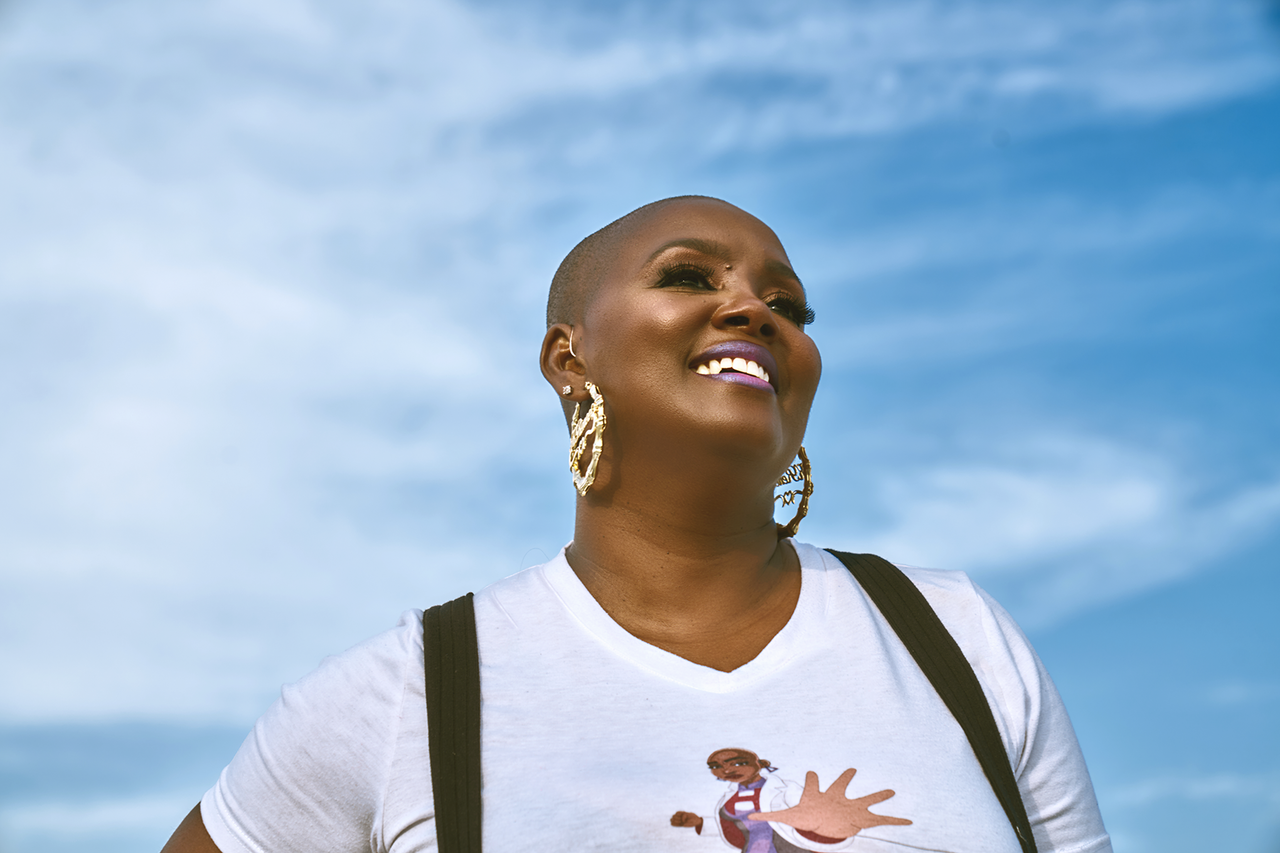
Dr. K Renee Horton is a tech leader and a Quality Engineer at NASA. We sat down with Dr. K Renee to discuss how she got to where she is today. She shares with us her journey as a Black, disabled woman in tech.
Karen: What barriers have you overcome to go from the telescope you were gifted as a child to being the quality engineer at NASA?
K Renee: That's such a loaded question for me because the telescope came when I was a child, probably about 9/10, somewhere up in there, and at that time I think we either learned I was gifted or right about that time after. Things that we see as barriers now, weren't barriers then. I was placed in an all white school/environment because of the gifted program. So I was placed in this all white school environment and now I watch people struggle with that and that was my norm for me. I was bussed into a white school. But, when I think of the barriers, I learned that I was hearing disabled at 18 and that created a lot of difficulty for me because it was weird knowing that I was smart and not truly understanding what had started to happen. I was so used to being able to excel and then I watched somebody reject me. Like, they marked the X on reject for the air force ROTC. I was rejected, I felt like a failure..
To have them reject me during my physical was literally the death of my dream, it killed everything for me because at that time I was trying to be an Air Force pilot and go through the Air Force and then become an astronaut and go to NASA. So I guess that was milestone one or obstacle one that came and was very derailing.
I very lightly joke about my boyfriend who at the time became my husband, but he was the epitome of a Black man. He played football and he had muscles and chest and was very attractive and extremely dark (I like them dark!). Like somebody took the darkest chocolate and poured it and that's the way he was for me. We got pregnant. Now, I’m from the South and so my dad was like, “You will get married” because you know, that's what you do when you get pregnant. We got married. But, obstacle two came at that point because it is different being in a space that, you know, you are too big for. And even with my marriage, I knew he wasn't the guy because his dreams were little dreams and my dreams were big dreams. So we ended up separating and I can't really call it an obstacle or a barrier, but it definitely put me in a place that made me have to move differently. So it would be my hearing and then the marriage and then us separated and me giving birth to my daughter.
When giving birth to my daughter, they brought her to me and I looked at her and I realized I wanted the world to be different for her. It also meant that I needed to reactivate what was inside of me to be able to do that. That is when I started dealing with my biggest obstacle, which was my hearing loss at the time and conquering that to be able to revalidate myself to say, “you belong here and you belong. You have the right to succeed here.” My hearing loss creates a lot of anxiety. It makes me question the spaces I'm in and if I'm supposed to be in those spaces.
Coming from an environment like how I started in a two parent household and then my parents divorcing at about 13 and then going into a single parent household where my mom didn't make enough money to take care of us, but she made enough money to keep a roof over our heads (which I’m so very appreciative for that) was also a barrier [post giving birth] because I was now in a financial place of not being able to be taken care of them as well. Then, life changed when I accepted that this is what God poured into the world and into the mold to make K Renee. Once accepting that, everything else that came along just seemed like a little sand hill. It never ever seemed like a mountain again. Once I accepted my hearing loss, I accepted what goes along with that.
Karen: That's powerful. Thank you for sharing that. That's amazing. I especially love how you felt this intention to create a better life for your daughter, specifically. There's something that you saw in your daughter. I know that there's something to be said about seeing a Black woman moving ahead in life. It shows us and tells us that we have permission to step into those spaces. So I thank you for sharing that and being that example.
Karen: So that segues into my next question, which in some ways I've kind of heard you say, but how has your intuition showed up for you as you took on the different roles?
K Renee: I don't even know if it's intuition or being able to truly hear God's voice now. There was a time when I was moving in such a reckless way. I remember being very haphazard about my decisions and not really always thinking them through. Sometimes they were good decisions for the moment and sometimes I never thought all of those things through.
You know, my mother jokes about it (and we all do) but the big joke is my daughter was born with her eyes open. I'm from Louisiana and you know there is something somebody had to say about what that means. But, after listening to all of the old wive’s tales, her godmother (a lady who was a part of my life at the time) was Nigerian and gave my daughter the Nigerian name Onyinyechi and it means “God’s gift”. That may have been the first moment [of intuition] because I was holding the baby after I had almost died. I hemorrhaged on the table and I also refused blood because I was weirded out. Like, you would give me somebody else's blood? I didn’t know how that worked. Do I get their spirit, their energy too? I don't know and I don't want that. We called in my daughter’s godmother and she made me some new mother's soup. She was like, “No, she's taking no blood”. I was like, “Yeah, I'm not taking no blood." She said ``NO”. She gave me this new mother soup and that was the only thing I ate that day in the hospital.
After a few days I felt okay and didn’t need the blood transfusion. When I saw the baby I was like, “oh shit, her eyes are open and why is she so dark?” The doctor was white and the doctor went, “Um, isn’t her father black?” and I went, “yeah, but the boys [my sons] looked white when they were born. What's going on with this?” She was a beautiful, dark baby. Oh my God. But the thing was, I had prayed to God for beautiful Blackberry babies and the first two were under cooked and this one came out and she was just stunning as a baby. She didn't even look real to me. One of the things though was looking at her, she said, “what are we going to do now?” And I was like, “I just had a baby; I ain’t doing nothing”. My mom was like, “ Are you talking to the baby?” She had such an intense stare even as a baby. I think that may have been that first round of intuition. To say, I know I need the world to be different for her and I need to do something. I need to be powerful enough that she can be everything God has planned for her.
Along the way things were still haphazard. I'm going to college with three kids, crazy idea. I don't even know what made me think of that idea, for real. I went back to school with those three kids and really had to rely on that gut feeling that shows up. But, now that I know better, I know it's not really all about a gut feeling; it really is about God walking you through where you're supposed to be. I've had faith, but my faith and my relationship with God got shook up when my grandmother died.
When my grandmother died, I told God I was angry and let him know, I'm a little pissed off about this. I strayed for about six to eight years. But, when I went back, I went back, walking in my faith and walking in believing that there was a purpose that he has for me here.
I tell people all the time, I love to shoot dice, but I don't like shooting it in a casino. At any given time, you probably could catch me in an alley at one point shooting dice. I liked the game and I liked the excitement of it. But, those aren't smart decisions. I used to ride a motorcycle. I bought the motorbike after I had the kids and they were old enough. All I could think of is that if I get killed on a motorbike, everything, insurance, you know, they'll be alright. I went to work one day and my boss said to me, “um, you know, NASA pays for your brain?” That was it. That's what he said and it hit me like a ton of bricks. Not only does NASA pay for my brain, but God has a purpose for me. I probably shouldn't be doing this crazy stuff over here like that.
I rely a lot on energy, connections. People can walk in my life and just because they want to be my friend does not mean they will be my friend. There are people that I've never wanted to be associated with again because of that feeling or the lack of energy that happens. Maybe because I'm an old quacked up physicist and scientist at heart, but it's less about the intuition for me and more about what's in the Earth or in the Universe for me and when it meets me, I'm usually open enough to accept it.
As I move through the world now, I rely a lot on being able to hear what God has to say about the people that are in my life, the opportunities. I depend a lot on my spiritual advisors. My intuition has told me plenty of times that a person is not for me. That person should not be on my train. I'm very thankful for the voice that I hear a lot of times that makes me second guess because if I ever second guess then it probably is not going to happen.
Karen: I love that. I love that. Well, I feel like all of our spirits are very much aligned because everything you're saying holds very true, especially as you get older and not even just older, but you surrender to what society thinks you should be doing and you now surrender to what God needs you to do. A lot of people go through their whole lives never surrendering to what God wants them to do because along the way, we've been taught to go to school, get good grades, get a good job, live the American dream. It sounds to me like even though you are on a path (because it is God’s) you've not allowed yourself to fall to the trap of what everybody else is doing, but you've, like you said, followed God in that sense.
K Renee: It's a hard road constantly being somebody else.
Karen: Has there been a moment in your career where you felt like, “Wow, I'm affirmed. I'm doing what I'm supposed to be doing”? I know you mentioned the starting point of even wanting that was when you gave birth to your daughter, but now that you're in the scientific field specifically, was there a moment you felt affirmed?
K Renee: Career-wise affirmation came recently. It’s kind of funny. I've been a doctor now for 10 years. I didn't get comfortable with the title until six years in and now I'm 10 years in and 20 years post my undergrad at that point. I'm 10 years in, I graduated in 2011 and I feel like a doctor now.
Two of my projects for NASA have been extremely successful. But, this particular last project is where my dissertation work was. So to know that the work that I did propelled this particular rocket, it will send the next man to the moon, it’s going to send the first person of color to the moon and it's my work- it’s work that I personally touched is affirming. The catch is, being affirmed at NASA didn't mean that much.
I've been on the speaking circuit now for more than 10 years. I’ve done commencement speeches and everything. I had to buy one of those doctoral gowns, you know, all of that. The first time I spoke was before I got my PhD, but LSU, which is my undergrad, invited me back to give the commencement to the engineering class. To stand in front of that group of students which was the largest audience I had ever spoken to — 6,000 people in that auditorium — I knew right there, right there at that moment that they were excited to hear from not Renee, but Dr. Horton.
Karen: That’s beautiful. In those moments I’m sure you thought about all the things that led you there. All the ups, all the downs. You look back and you’re like, “Okay, it makes sense, God, I get it. I get why you prepared me”. You play back all those other scenarios that you didn't get it, or maybe you did get but you were defiant.
K Renee: But, the crazy part is I’m less affirmed in the fact that God chose me. I'm thankful, but I still question if He was on an edible that day. I don't know why he picked me. But, I'm walking better in that. And that came this year: the acceptance. But, that took a lot of counseling through my spiritual counselors.
Karen: As women, there can be a little bit of imposter syndrome or self-sabotage. You said that it took you until a couple of years ago to really feel like you are deserving. Where do you think this is rooted from?
K Renee: It comes from society. Like the images. What I love about TONL is when I pull up the page, there are so many people that look like me. Knowing that society dictates who will succeed and who will not, and that I'm not in the category of who's supposed to succeed — I'm very aware of that. My self-sabotage has something to do with my hearing, one but two, it has to do with it originally being rooted in my childhood because my father didn't know if I was his and acted accordingly when I was originally growing up. Then, when they said that I was gifted, my whole life kind of changed. [He was like] “Yeah, that must be my kid. We're smart on my family’s side so she gotta be mine”. Now, my father and I are best friends and we live together. I love that he’s everything that I need in a father now and that goes for my mom as well. I’ve watched life go full circle. But, I have to give it to my circle of people. The tribe that nourishes me because they're the ones that when I get caught doubting myself, they uplift me.
I got put on this leadership development program because I filled out an application and got accepted. The white lady who was my supervisor said, “Are you really qualified for this?” [In my mind] I went wtf? ! I got a PhD. How else could I not qualify looking at all of my credentials, everything I've done with NASA? You just questioned after being with NASA for almost 10 years whether or not I qualify for a leadership program? The catch is, I actually teach people how to be leaders outside of NASA. That was some crazy stuff to me.
Karen: I can't believe she asked that.
K Renee: Everybody's always shocked at this particular story. But, she's a white woman who has control over how my career would play out at NASA. She has that control, right. With her, if she had come into my space earlier in my career, I would not be as successful as I am because of the spirit she brings with her.
I have been truly, truly blessed with some amazing male mentors. My second year at NASA, I had an amazing white guy who wa former Air Force who genuinely cared about my career. My mentor for NASA on my dissertation committee genuinely cared about me and my career (another white guy). They saw what was inside of me and they knew it needed to be nourished to be able to be successful in my career. I’ve had some amazing people pour into me early on. Those mentors were amazing. My branch chief at the time was a black male. His division chief was a black female and so they got me in doors that I needed to be in. It got me to understand what I needed to do when you're invited to the table and when you need to build your own table. I was able to understand that there was a difference in that. So, even though I was struggling with being Dr.
Horton, being the person who's supposed to have this knowledge that comes to the table, I kind of struggled in that simply because of things that were already deep rooted in me. For example, if you go to Brazil it’s horrible because there is colorism. People there will literally use a piece of wood or something like a brown paper bag to determine if you are light-skinned or dark-skinned. So the brown paper bag in the South was if you were darker than the brown paper bag, then there were opportunities that you didn't get. Well, when we went to Brazil in 2005, they still functioned that way where the lighter Brazilians were the ones who were educated and the darker ones weren’t. Knowing that this was happening in another society and that it wasn't just America, it always nagged at me. I would say to myself “you little brown skin, baby, are you really supposed to be doing this? Are you worthy of that title of Doctor?” Then, I cut my hair. Shaved it bald because I heard God's words. I was like, “yo, this dude is tripping. I swear when he goes to talk to me, he gotta be pushing me to the limit” because the stuff he gives me is so far out that I can't comprehend what he's doing when he tells me to do it. He said to allow my Aunt to cut my hair. He said to let her cut your hair and so I cut my hair. For the first time in my life, I thought I was beautiful. I could see the beauty in me. It was that, that reaffirmed that I'm supposed to be who I am. I've been walking in that ever since. I cut my hair in 2014.
Karen: Wow. That's powerful. I totally understand how your environment can shape the way that you perceive things and you have to constantly, actively accept what external positivity is coming around you to be like, “okay, I need to negate this story I've been telling myself in my head because of the circumstances I grew up in”.
Karen: So I read that you had started your own non-profit and you called it Unapologetically Being Inc. Is that something that you're still actively participating in? And if so, what are you most excited about with the work you're doing there?
K Renee: It was started so that students had a place to be able to understand the true importance of being who they are when they bring their talents to the table. We advocate for people. Being able to give my voice to other people who don't have a voice became a true passion. With the organization, it was also a place to house all the work that I was doing outside of NASA. So my children's books fall under that. We give faces to little brown and black girls to know that we're in spaces that maybe not everybody wants us and/or thinks we're supposed to be in. So that's what the books are about- changing the face of STEM. So the organization still mentors. To learn more about Dr. K Renee Horton, check out her film here or view below. To learn more about other Black women in tech throughout the coming months, visit the campaign website here !