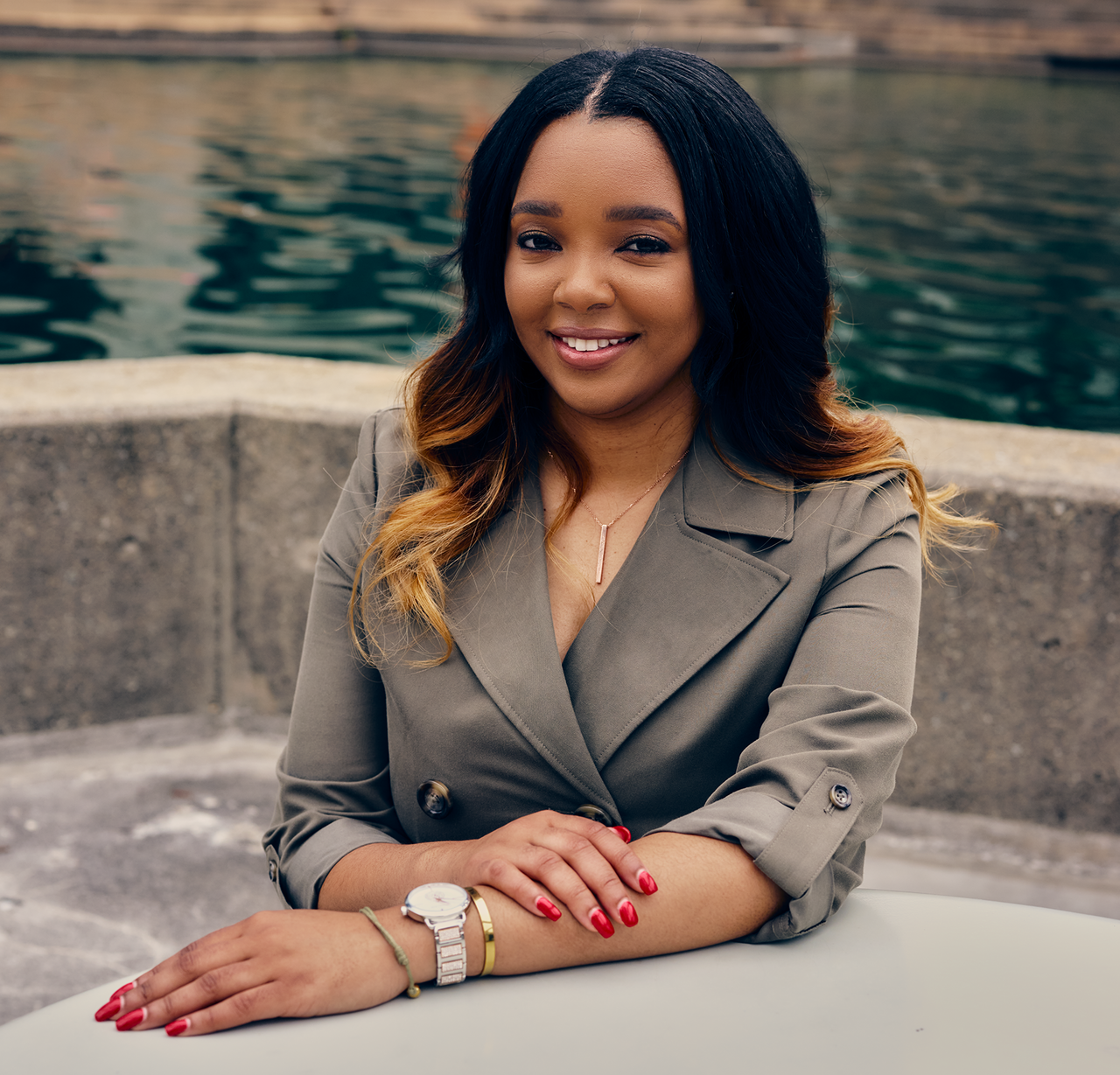
Black Women in Tech: Sheena Allen
In honor of our project highlighting Black women in tech, we’re sitting down with Black women across the industry to delve deeper into their stories. The women we’re connecting with are reshaping the industry by breaking barriers and leading innovative technology creation rooted in a vision for social impact in their communities.
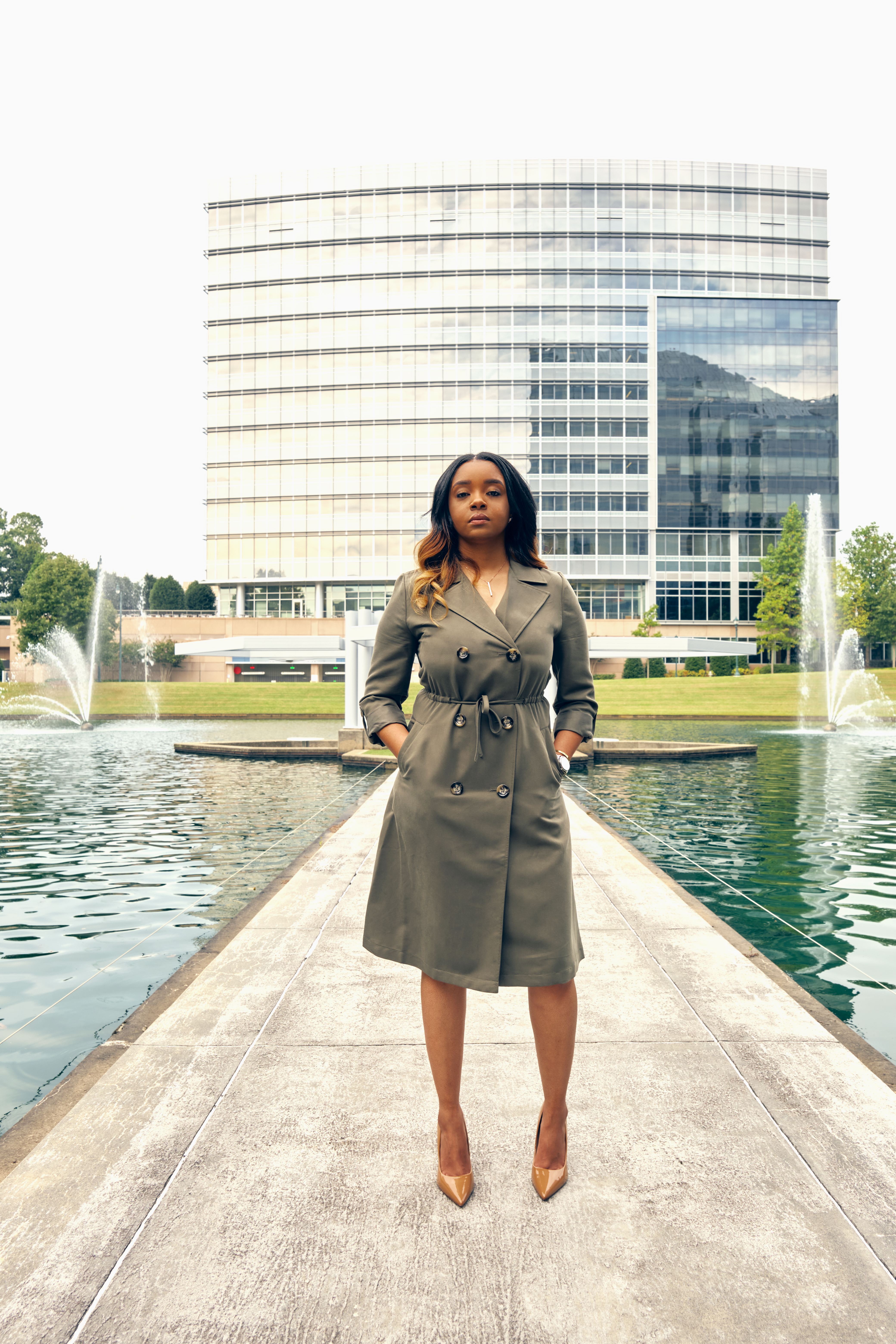
You can take a woman out of the South, but you can’t take the South out of a woman. This describes Sheena Allen, Founder of CapWay to a tee. CapWay is an inclusive fintech company creating financial access and opportunities for all in the cashless economy. The interview takes place in her office space at Industrious where the emails are chiming in and she’s in between meetings - the busy life of a company on the road to being a multi-billion dollar company. In this interview, TONL Co Founder, Karen Okonkwo, notes Sheena’s background growing up in Mississippi, how that shaped her experience as she moved into the fintech space and what empowers her on this journey.
Karen: I know that you grew up in Mississippi. Can you tell me a little bit more about what that experience was specifically like from the lens of being a young, Black girl?
Sheena: Yeah, so I grew up in a super rural country town. So rural that there was literally a pasture of cows across the street from my house. Super country. My country accent really doesn't go away. I've lived in so many different places and it follows me everywhere. But yeah, so it's crazy because it’s the whole saying of “you don't know what you don't know”. So growing up in Mississippi, to me, it wasn't a thing. It was a lifestyle that I knew. I didn't actually realize the impact of growing up as a Black woman in Mississippi until I left Mississippi.
Karen: What was the biggest shocker between you growing up in Mississippi and then you moving on from where you grew up? What was a defining moment for you that things were different.
Sheena: I left Mississippi and I spent some time in San Jose, Silicon Valley, fresh out of college. I remember I went to a Safeway in San Jose. I went to go buy some peanuts and those peanuts were like seven bucks. It would’ve been $3, $2 at the Dollar General in Mississippi. That was the biggest shocker for me - that “we're not in Kansas anymore!”
Mentally, I realized I was in a different space spending time in the Valley. Even before I moved to Austin where I stayed two years. Being around people who were in tech (and this was 2013), just the way they thought was so different. How they looked at and talked about wealth and the way that they went about it was in a way that I had never seen or even thought of because growing up as a young, Black girl in Mississippi my vision of rich was Jay-Z, you know, riding around in the Bentley in a music video.
Karen: Yes, I love you for saying that. Yes.
Sheena: Jewelry. Like, that's all that I knew. I never even knew this other world existed. So tangible-wise I was looking at things differently picking up those [seven dollar] peanuts. Mentally, it was meeting people in the tech space in the Valley and just the way they thought about wealth.
Karen: I love that answer. I love that you said that your perception of wealth was tied to just the culture, like the hip hop culture of external actual objects. But, I'm sure for you, as you continued to move and create CapWay that you realized that true wealth is in economic independence, which is done through assets and not necessarily material things that you know are an asset in some ways, but not long-term.
Sheena: First, let me say that wealth is of the mind. There’s nothing wrong with having money. Having ‘money money’ is financial freedom and it does a lot for you, but I think that wealth is of the mind.
I can't remember what song it was that Rick Ross had out. I think it was like an intro maybe, or an interlude, something where he calls his bank and the bank says he has like $30 million in the bank. And I remember I used to jam to it!
And then, I discovered a world where people were so wealthy that they were giving away $30 million in scholarships every year. It was crazy! But yeah, that was my wake up call.
Karen: Oh my gosh, I love Rick Ross, by the way.
Sheena: Yeah, I’m a huge fan of Rick Ross. He took his circumstances and really became a true boss.
Karen: So to that point, you obviously started to get exposed to a different community, a different way of thinking and I know that you eventually started a lot of businesses, but the one that we’re obviously here to speak about is CapWay. What would you say was ‘the why’ of you creating that company?
Sheena: Mississippi. It’s home. Mississippi is family. I grew up in an under-banked community. A lot of people were unbanked and underbanked. So it was all that I knew. However, I didn't realize what it was when I was growing up. I didn't realize it until I moved away. I left University of Southern Mississippi and spent some time out in San Jose and ultimately built my first company out of Austin, Texas. What was interesting was going back and forth between The Bay and Austin, it was a lot of places even back in 2015, 2016, 2017 who didn't take cash in the bigger cities. Whereas areas deep in the South, especially Mississippi, Alabama, Louisiana, pre-pandemic, before the cashless economy was forced upon us, cash was KING. Like, that's what people carried. People carried cash. I remember I would beg my Dad to open up a bank account. My grandmother used to keep money in her house. My Dad used to keep money around the house. My great-grandma kept her money in her sock and her recliner. People in the South carry cash. Even if you had a bank account as a 20 year old, 30 year old, you wanted people to be able to see it [money], count it out. So it was seeing how some cities I was in were pretty much saying, “Oh, we don't take cash. If you want to eat here, if you want to shop here, you gotta have a debit or credit card,” and then going back home and seeing how that just was not the case at all.
Even prior to the pandemic, I can honestly say that the whole thought and premise behind CapWay was “one day, this whole not taking cash is gonna impact people outside of just big cities. What is it going to look like for everybody else?” So that was the why behind starting CapWay.
Karen: I love that. That to me is just profound. I'm with you. As far as growing up ( I'm first generation Nigerian-American) in Arizona, I also experienced that cash was really what I always saw. I never even thought about banking until maybe in high school when I think it started to get cool to even just get like a credit union. So when I heard that you had created CapWay, I was like, “this is literally the future because you know, more and more people need to become financially literate and not just “how to budget” and everything, but how to set yourself up for the future.
Karen: So I know that there are a lot of Black women that we're profiling now who are starting businesses, but they’re in a situation financially where they don't have that access. I know for you, you bootstrapped your first business. So how did that experience shape your entrepreneurial journey? How has that shaped you?
Sheena: I'm so happy that I bootstrapped my first startup. So happy. There's so many pros and cons to each side, but the biggest benefit of it, the biggest lesson for me in doing it is the love of ownership. You know, a lot of people want to get VC dollars and depending on your industry, you need it. So, I mean like there's nobody that's building a whole telehealth company without some outside funding. You're not building a CapWay without outside funding mainly because they are super, highly regulated. There's so much money you’re going to have to have upfront before even getting it off the ground. There are certain industries that you just know have to have a VC backed company.
But, if I had to choose how to do it, I would bootstrap because one, you're in 100 percent control. You don’t have to answer to anyone but yourself. With CapWay, we are VC backed so I have to send out monthly updates to my investors, and I have to build my cap table, and I have to pitch. But, with my other business, I bootstrapped it.
My decision was my decision. I didn’t care about what anyone else said. If I failed, I failed on me. But, with VC backed companies, yes, it does come down to the execution of the Founder of the company, but a lot of the times, there's also outside influences that go toward that failure. Maybe it's an investor saying, “You should pivot here” and that Founder pivoting versus sticking to their own gut. So the biggest benefit to bootstrapping for me was the true meaning of ownership, but also understanding how to build a company and be scrappy. I think for people, peers that I have in this space who have only ever been VC backed or came from a golden spoon in their mouth, they're not as scrappy as what I see the people who bootstrapped or didn't have it. I know Black women who raised around a quarter of million and did wonders with it. The same non-scrappy person would have received the same amount and complained that “this is not enough”. We [Black women] are super scrappy and we are super resourceful. I think bootstrapping elevated that for me because it was like, no one's going to give it to you. You’ve got to get it yourself. So even though we're VC backed now, I'm not as super dependent on this funding. I’m like “how do I get more customers?”
“How do I get revenue?” If nobody else writes the check, we have to know what to do.
Karen: I love that and it really just speaks to how you understood your mission. You understood what you were here and designed to do and so that helped to obviously lead you down the path toward getting what you needed.
Karen: To that point, what advice would you give when it comes to just sticking to your mission while working and getting recognized by major brands?
Sheena: I will give external advice the same way that I give internal advice to myself. Being recognized, raising money, getting the recognition, getting the accolades: They're all great. I think for someone to recognize your work, cheer you on, is amazing. I think support is vital and really important. However, on that same note, I’m a hundred percent appreciative of every recognition I've ever gotten every award. Cool. Great. Thank you for the appreciation. Like okay, now let’s get back to work. I don't allow people to clap for me and build me up because that means I also give them the power to tear me down. So I appreciate it. I'm very grateful, but cool, let’s work. So my advice would be if nobody's clapping for you, clap for yourself. If you do allow others to clap for you, don't let it get to you. Don't fall victim to your own hype.
Karen: Thank you for sharing that.
I heard that you, yourself, outside of being in the tech space, are also a Creative. That you'd like to get into some film work. How do you not let yourself be defined by one category? What is it that you do to stay multifaceted?
Sheena: That's always been really important for me. I never wanted someone to mention my name and I'm only tied to one thing. I feel like that happens a lot. I feel like when you say Mark Zuckerberg, you automatically think: Facebook. There was an interview that I saw that Pharrell Williams did and he said, “ A lot of y'all are one track minded. Y'all are one dimensional”. He said, “That's cool. But, as Black people; there's no such thing as one dimensional for us”. And it's true. Even with my investors, I'm like, is CapWay my main thing? Is it my baby? One hundred percent. Am I trying to build up a billion dollar company here? Without question. But it does not mean it's my only idea. I always tell people that CapWay is my book. It’s my main book. But if you’ve ever written (I don't care if it’s an essay for school or if you wrote a book) and you haven’t taken time to step away, you throw your own self off. We’ve all written an essay, came back and read that same essay three days later and was like, “did I have that many grammatical errors when I wrote it?!” We see how we need to make some adjustments to make it better. That’s how I look at CapWay -that is my main book, but I'm creative. I want to film, I want to do art. Like, I wanted to be an artist. I didn’t even want to go to college. I wanted to do art, but my dad was like, “You won't make any money doing art.”
So, I have other ideas for businesses. There's so much that I want to do. I don't want it to be when my time comes to leave earth: she was a great woman. She built CapWay. Instead, I want to be known for the multitude of things I’ve got going on over here.
Karen: I’m the same way. I feel you! Thank you for saying that.
Having this knack for creativity, I wanted to end with this last question. When you need a music pick-me-up, you know, when you're working hard in your business, what's the song or artist that really speaks to you?
Sheena: This is my Southern Baptist coming out. It's going to be Gospel, and it's going to be “Close” by Marvin Sapp. I love Marvin Sapp. But, that’s my overall “pick me up,” but other times, it’s just based on my mood. Some days I’m Beyonce “Girls Who Run the World”, you know what I'm saying? It goes based off of my mood.
If there's one person whose voice literally moves me, I don't know why it gives me chills and I've listened to them probably 800 million times, but it’s Fantasia. I don’t know what it is. I love KeKe [Wyatt]. I love Jennifer Hudson, I love everybody that really has that voice. But, it's something about Fantasia.
Karen: I agree. I agree. Just you saying it, I have chills cause I know exactly what you're talking about.
Sheena: Yeah, I can't explain it. I get that Jennifer is more mainstream, Ke can run 10 million vocal lines, and I mean,10 million vocal lines that sound great, but there is something about Fantasia. Fantasia can yell out loud and I will be like “Oooo!”
If I’m in the house, I just turn Tiny Desk on and let it go. I’m a music lover. I don’t even know why I have a TV to be quite honest because I don’t even watch it. If it’s on, it would probably be to watch and listen to music on YouTube or something.
To learn more about Sheena Allen check out her film here or view below. To learn more about other Black women in tech throughout the coming months, visit the campaign website here !