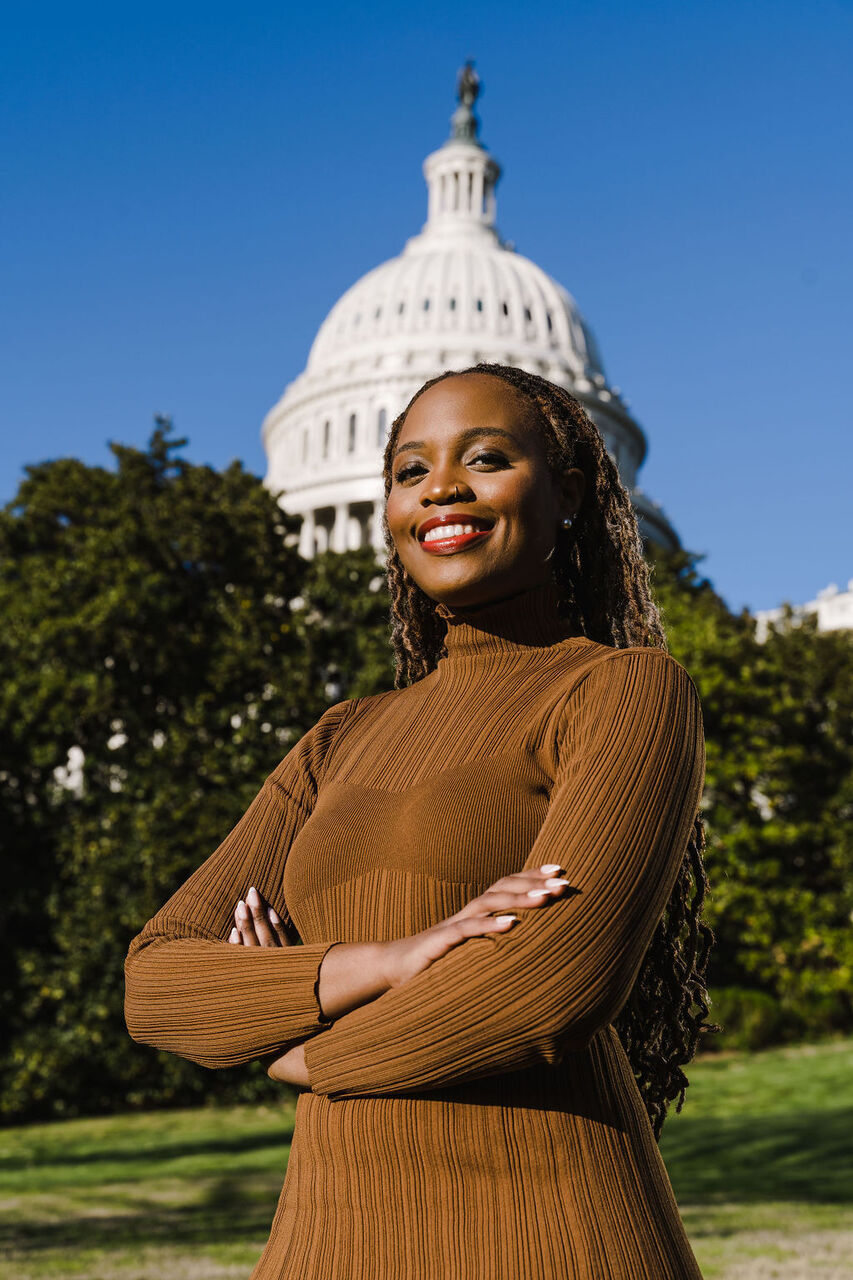
From PhD to Policy: A Black Woman’s Journey to Capitol Hill
There’s a new generation of people on Capitol Hill that reflect the increasing diversity in the United States. Working on the frontlines of social policy to restore justice for marginalized communities in the United States is something that many people from disadvantaged groups wish to do. But, what’s the pathway to getting there?
We spoke with Dr. Chelsea Crittle, a Senior Policy Staffer in the United States Congress. We spoke to her about the opportunities that got her into policy, and the challenges she faced along the way when entering the government as a Black woman from academia.

Social policy has been a career interest for Dr. Crittle since her teenage years. Growing up in Houston, Texas, Dr. Crittle attended a Black and Latinx-serving high school. As she progressed through school, she noticed that her school was treated differently compared to other schools in the district, even though she couldn’t put her thumb on why. This led her to wonder the role that race was playing in those differences, thus sparking Dr. Crittle’s passion for working in spaces where she could advocate for social justice on behalf of the disadvantaged. The only question left was, how was she going to get there?
“My background was really in advocacy, social justice, black feminist thought, and really reimagining our current systems [to figure] out how can we institute real, radical change.
So, I was drawn to these tackling these large, systemic issues, but didn't necessarily know how to get there. I thought I was going to be a politician and was a political science major for a while. And then I was pre-law, but none of them really felt right until I did a social psychology research internship for the summer.
I was a psychology major, but never had done research up until the summer before my senior year at Spelman. And so that summer, I was at Stanford. I was placed in a black grad student’s lab, and he was doing work on the school-to prison-pipeline. That was the first time I really realized, okay, research-and-policy; there's a connection there. Maybe that's the way that I can intervene and tackle this huge issue that I'm interested in.
And so, this kind of solved my first dilemma; figuring out how to impact social change on bigger policy issues. Then, the second issue was, ‘How do I navigate a program or a field like academia that's not really geared towards non-academic careers?’”

Dr. Crittle isn’t alone in that feeling. In fact, about 40% of graduate students become interested in non-academic careers by the time they finish their schooling. Despite their desire to work in institutions like policy or industry, many Masters and PhD programs don’t train – or even encourage their students to work in non-academic careers, leaving those interested in non-academic careers to seek training and professional experience for those careers elsewhere.
“When I was going on my interviews for graduate school, I was specifically told, ‘do not tell anyone you don't want to be a professor, they're not going to accept you.’ They have their own personal goals of getting tenure and publishing and them having students that go on to academia is a better look for them than to have someone who is not interested. But I ended up telling my advisor anyway, that, ‘hey -- I don't want to be an academic. I'm not supposed to tell you this, but I'm really interested in policy.’ Thankfully, he was really supportive and helpful. He told me, ‘I'm supportive of you doing more policy research, but you got to figure it out yourself. Because that's not what this program is about or what my expertise is. I'll help you do it. But you really have to take the initiative.’
From there, my third dilemma was figuring out how to make my research policy relevant, especially in a program that is not applied whatsoever. So, I started thinking about some of [my advisor’s] research on persuasion and how Black folks confront racial bias. I decided to take that research and switch it into ally-ship; how can white people confront bias? Thinking about the social climate at the time, I just knew that, for one, it's important work that needs to be done. But it's also very marketable and has a lot of implications for different settings.
That was one aspect of it, but the other aspect of honing my policy skills while in grad school were internships, fellowships, and any opportunity to do talks about diversity and inclusion or implicit bias. I went to a lot of policy conferences at Harvard and on my own campus to diversify my experiences so I just wouldn't graduate and just be simply a social psychologist, but I would have more marketable and translatable, translatable skills beyond social psychology.”

Fast-forwarding to the present, Dr. Crittle has since graduated with a PhD in Social Psychology. She is currently a Senior Policy Staffer in the United States Congress, where she applies her scientific lens on diversity, equity, and inclusion to draft bills on various policy issues. This is a job that only existed in her dreams when she was in graduate school (quite literally, as the position she holds in only in its 2nd year of operation). However, her position as a Black woman scientist in Congress doesn’t come without its challenges.
“[A] barrier in studying race and also doing work on diversity and inclusion: The messenger matters, right? There's a lot of social psychological research that shows when Black people or women are talking about racism or sexism, they're seen as operating within their own self-interest; just doing things that benefit them. Because of that, they're seen as less credible. The impact [of that] is [that] people just don't buy into what you're saying. On the flip side, if a White man were to talk about racism, or sexism, people are seeing them as not being self-serving whatsoever. And as a result, they're seen as more credible; when White people perceive other White people talking about diversity inclusion, they're seen as more of an expert. That is something that I constantly have to navigate; I'm being seen as working towards my own self-interests [as a Black woman]. And I'm also not seen as like really being an expert on [diversity, equity, and inclusion].

We shouldn't have to prove that we are experts. But at the same time, when you're doing this work, persuasion and getting people to buy in is a huge part of it. Because in policy, you need people you need to know how to negotiate and get people to buy in. There are certain things I can do to combat that, like using my credentials. When I meet people, I lead with, ‘I'm a doctor, I'm an expert on this topic’ to couch in that I'm not just talking about my lived experience, which is extremely valid. But on top of my lived experience, I am very educated on this topic.”
Every career choice comes with its challenges. When people transition into new career paths, they oftentimes think that the grass will be greener on the other side. But sometimes the grass sometimes isn’t greener on either side; they’re just different shades of green. It’s the moments of the joy that people find amidst all the hurdles that they face at work that make the difference in peoples’ job satisfaction. Dr. Crittle finds joy in the sense of gratification she feels knowing that the work she is doing is directly benefitting the lives of underserved people across the United States.
“Coming into this role as a researcher and social psychologist was a huge learning curve, because in research, there's a lot of delayed gratification. So, there's not like an immediate return on your investments. Sometimes [in academia], it's hard to see why I’m doing this or the bigger picture of how this [work] matters. Working on the hill, things move so fast; at a pace that we're just not used to as researchers. Some similarities are that, when you're in graduate school, there are late nights; there's a lot of burnout; there's a lot of stress; there's a lot of urgency. It’s the same working on The Hill, too. But the difference is that you're staying up until 12 or 1am ending the moratorium on evictions… saving someone from being evicted. It's easier to see how your work is leading to impactful change.

I'm not saying that being in academia can't do the same. But it's so immediate, having that relief of thinking that this is really going to impact millions of people. Being able to do that kind of work; that feeling is indescribable. It also makes you feel like this is the part of my purpose. And this is bigger than me. Since I've been in high school, my mind has always been thinking about how I can mitigate some of these negative experiences that Black people face. Being able to see that in real time, especially being at The Hill for such a small time period. Even though I've been here for less than a year, I feel like I've made the impact that probably would have taken me 10 years [to do] in another field. It's very rewarding. And it kind of helps the hard work be sustainable for a lot longer because you know how important it is. You're talking to advocates in the community and working alongside them to come up with solutions for change. And to see it when it finally happens. It's awesome. It's amazing. And it's definitely a once in a lifetime opportunity.”
Dr. Crittle’s advice for anyone embracing a career path that goes against the grain of what is typical in their field is to have faith and be intentional. Just because there isn’t a clear and obvious pathway to someone’s dream career doesn’t mean that it isn’t possible to create one. See the signs, be open to new job prospects, and persist through the struggle. Then, the dream job will reveal itself.
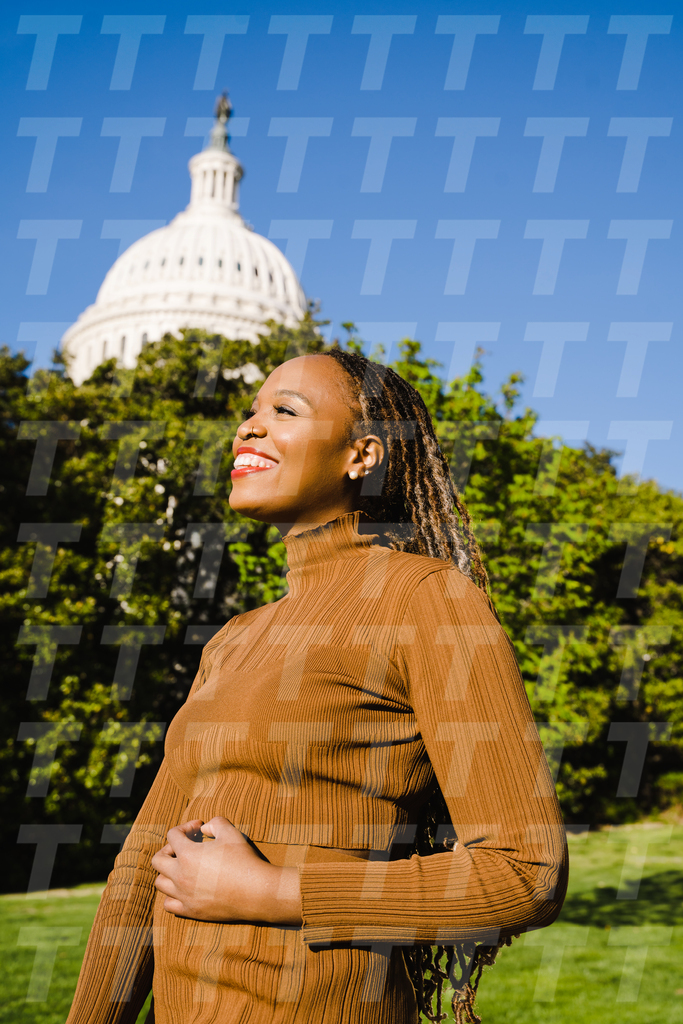
“One thing that I was told early on in my graduate career was that the job that you want probably doesn't even exist yet. And that is so true because this job I'm in now was created two years ago. That just gives me like goosebumps thinking about it.
Trust that you'll end up where you're supposed to be. When I was an undergrad, I knew that I was interested in these systemic issues impacting black people, I just don't know how to get there. I just know that I'm at point A trying to get to point B but don't really know what's in between.
At every stage, I took a leap of faith. I was intentional about putting myself in spaces where I can learn about new opportunities but was also flexible enough to where I embraced [opportunities] not knowing and trying to figure it out. One part is leaning on what you do know, but also being flexible, embracing curiosity, and just being open to new opportunities. And then that will lead you on this beautiful path that you kind of carve for yourself.
Trust that if you're aligned and you speak to your intentions, you'll end up where you're supposed to be.”
To learn more about Dr. Crittle’s journey from PhD to policy, check out her Instagram and YouTube channel.