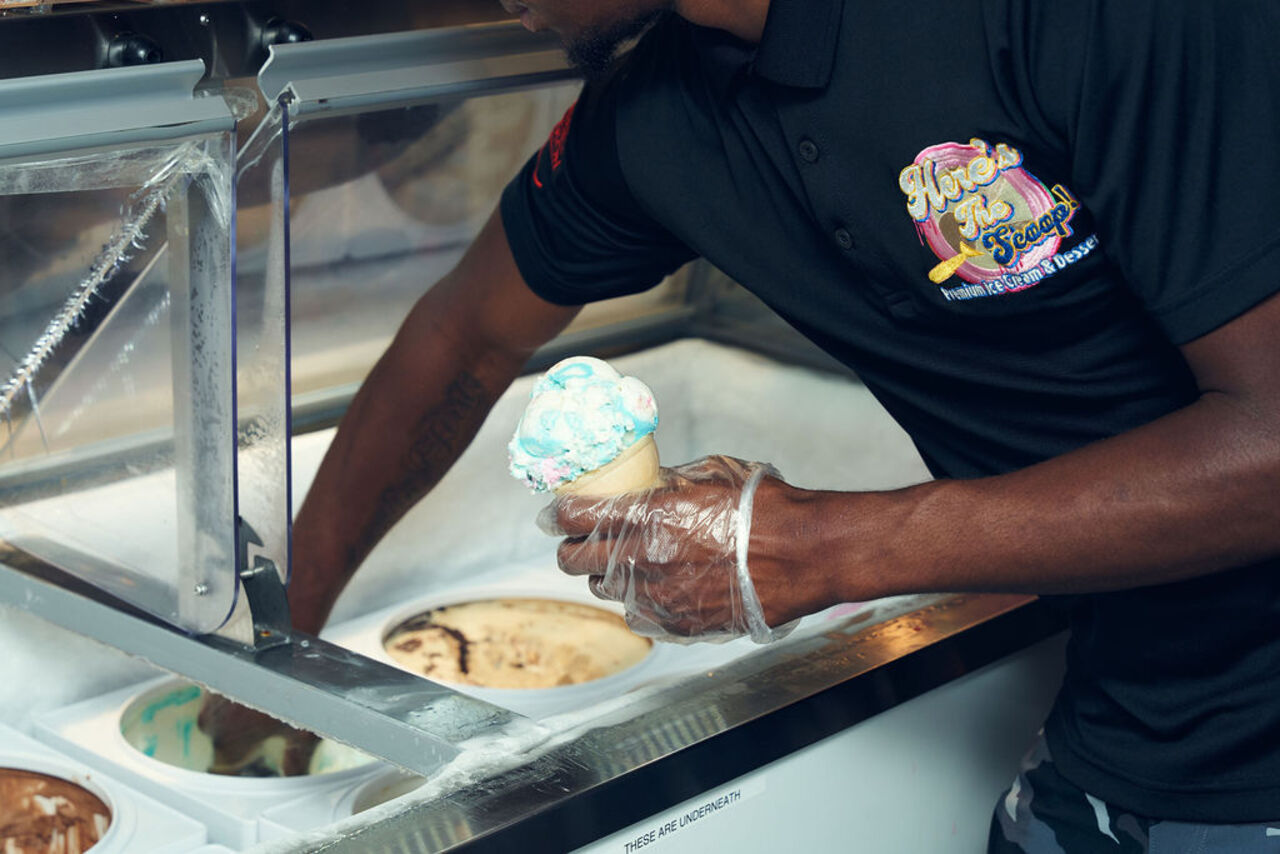
Here's The Scoop: Community Impact Through Ice Cream
Who can be in a bad mood when they’re eating ice cream? Karin Sellers, a Black woman, native Washingtonian, and owner of “Here’s the Scoop!”, an ice cream parlor in the heart of DC’s Columbia Heights neighborhood, is very familiar with that fact. For Karin, ice cream became a way for her to spread joy with her local community while continuing her family’s legacy of Black entrepreneurship in Washington, DC. For this narrative, TONL sat down with Karin to talk about her intergenerational roots in entrepreneurship, her reasons for starting an ice cream parlor, and how that ties into her philosophy of community impact.
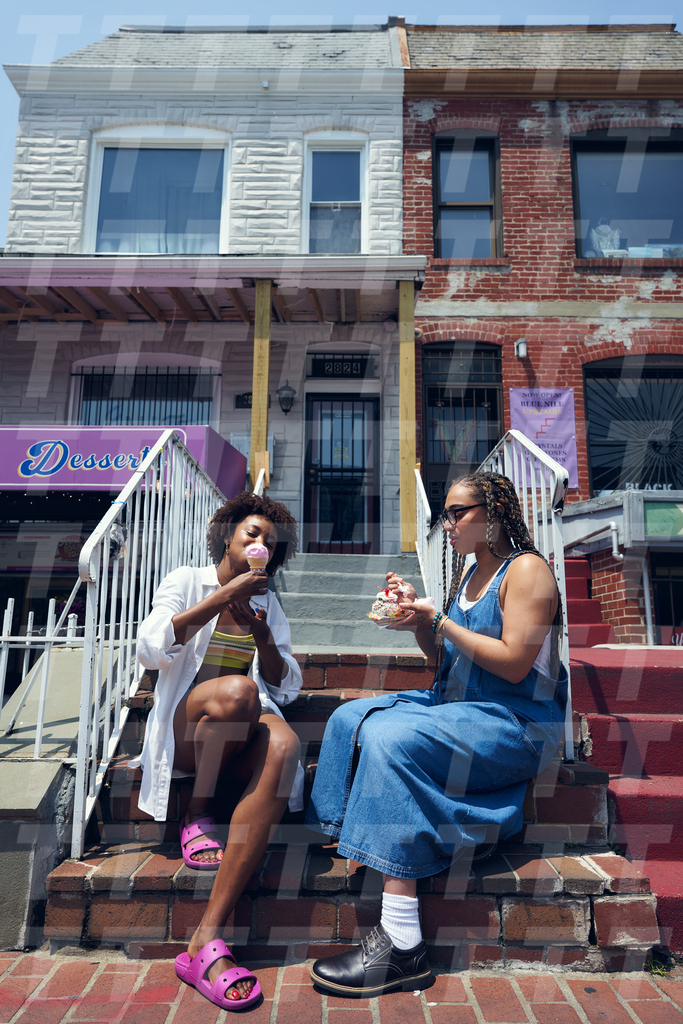
Karin Sellers (K): A little bit about myself: I’m a Washingtonian. I’ve always been in The District, from childhood, high school, as a young adult, until now. And I love my city; I really do. I come from a family of entrepreneurs, a working-class family. My grandmother had a hair salon and laundromat. I followed in her footsteps as a cosmetologist [and] did hair for over 30 years. As of 2019, I’m the owner of Here’s The Scoop!, an ice cream parlor in the heart of Columbia Heights.
TONL: So, what spurred you to take a turn away from hair and lean towards ice cream? What was the motivation behind that for you?
K: I've been at this location for so long. Like I said, my father and my grandmother had a laundromat on the lower level. So, even at the age of 10 or 11 years old, I used to work in a laundromat serving the community. Over the years, I have seen the changes through the city. I've been here through bulletproof glass murders; you know, not the most welcoming environment. But it's been our environment, and we learned how to make family, friends, and a community. The people who have been here for a very long time have seen some of the roughest and the nicest times [here]. So, I'm very tight to this.
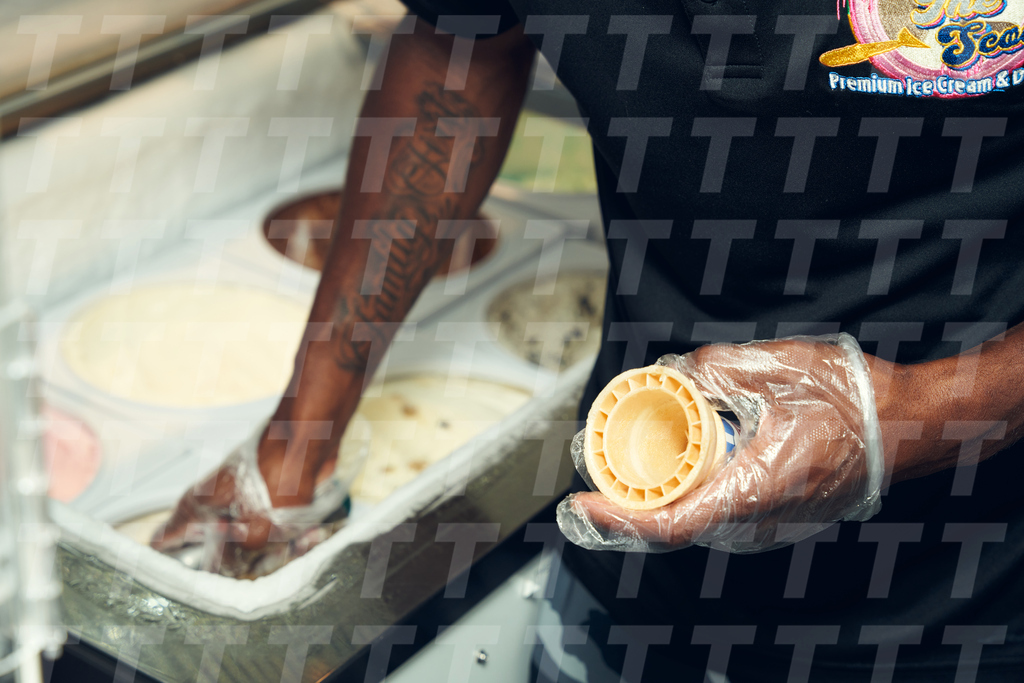
Through the pandemic, we had people who didn't even know that we existed. And ever since they’ve come out, our Google reviews are amazing. People would think we paid people to say some of that stuff! When I read that stuff, I congratulate my staff. They do such a really good job of giving what I want people to experience when they come in the door. Because like I say, there's this ice cream, but I didn't come out and say I wanted to be a gourmet ice cream maker. Like it's not even about that. Our [ice cream parlor] is more about the experience.
TONL: It's not only the community that feels impact, but also the people that you work with. Can you tell me a little bit about how, as an entrepreneur, you've seen some of your approach to business rub off on your employees?
But, transitioning from that, when I [would] come out and patronize some of the businesses along this portion of the district, I never felt that connection with them. It was like, “you want to buy some gum? Here's your gum.” I give them my money, and then we're done, you know? So, I always told my clients [at the hair salon] for years that this neighborhood needs a place that is a happy place; a place that you feel welcomed; whose purpose is building a connection with the customer. So, if you’re having a hard time, if you come in, you're gonna leave with a smile. You want it to feel like family.
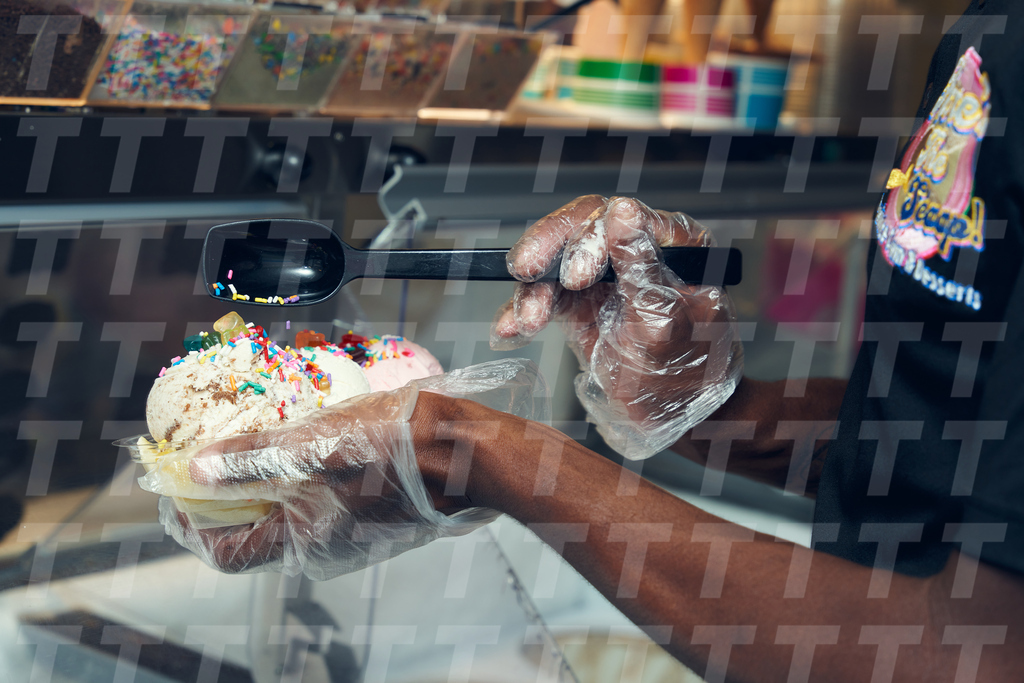
K: I always want to believe that [my employees] feel the energy that I give off. If they're having a bad day, I remind them that it's a mindset to choose to have a good day. I have bad days. But to be honest, I'm grateful every day that I wake up. So, I try to talk to my staff about that and just hope I'm pouring something into them as they grow and mature. Joy is something that you must choose to feel every day and I think that, when it becomes a part of you, people just simply begin to feel in when they are around you.
The staff are like my children. I talk to them like a mother would. It's a nurturing environment, and they seem to really enjoy it. When you look at your employees, you have to look at them as a whole person, not just how you want them to perform today. You have to understand that you have to provide that safe environment for them to want to be there. And then they’ll want to give the best of themselves to your business.
TONL: I see you have your children taking up the family business as well. Talk to me about that intergenerational component that you might have within some of the entrepreneurial things that you do. Because you did mention that your grandmother and father had entrepreneurial roots. As you're building up this ice cream parlor, how do you see that impacting your sons and the vision that you have for your family in the future?

K: We just sit and we talk a whole lot. I always talk to my kids about how important it is to have ownership of pretty much anything and everything. There are some people with some wonderful jobs and employment and all that, and I just honestly have never experienced the other side. I always have worked for myself. Truthfully, being a cosmetologist, when I started doing hair, I did kind of beat myself up, like the beauty school dropout type of mentality. I could have gone to school; and that’s not to say that I'm not gonna go to school and obtain my psychology degree because I do plan on it! But I will say that the cosmetology road and owning my own salon is an amazing feeling that nobody can take away from me.
So, I just try to tell them, having something that you can give to the next generation is more impactful. People get employed with jobs all the time. But when you're able to give something [to the next generation], whether real estate or business ownership… like, I'm creating jobs. I mean, it's not like, $100,000 paying jobs, but it's jobs. Maybe if I had gone to school, I would have understood economic development and all that type of stuff. But I was doing it already. And I didn't realize that. So, to me, it's just really important that I talk to my son's about ownership all the time, and I see the fruits of my labor, and I make sure that I carry on what my father taught me.

TONL: Let’s tie everything together. What thoughts or advice might you have for other Black entrepreneurs who are looking to build inter-generational ownership or wealth for their family through entrepreneurship as somebody who has gone through that yourself?
K: To be honest, what I can say is that I eat, sleep, and drink this all day long and I love it. So, I do think it takes a special personality or certain work ethic. Maybe if I had gone to school, I would have realized that I was already doing all that business type of stuff but didn't know the defining language that went with it. So, [for me], it's always about hard work ethics. I’m always thinking, what can I do next? What do we need to do to position ourselves for the next big thing to come? Because even though the pandemic caused a lot of pivoting, I've been doing that all my life. So, I understood it before I even had to do it.
But also, for me as an entrepreneur, touching the community and being able to make a difference and other people's lives has been the blessing throughout this whole process. And that's what's always been important to me; all I ever wanted to do is open the ice cream shop doors and say, “how may I help you?” That was really it. I wanted to connect with the customers. But I didn't realize how many other doors were going to be opened to me just from a simple dream. And so, I eat, sleep, and drink it every day.

TONL: That's really beautiful. And I think the most impactful part that you said for me is that, when you're living in it, you're already doing the things that we think people might have to “go to school for.” We might think that those who went to business school or have a degree know more about these certain things, but in all reality, I think innovation comes as a result of just doing it, pursuing it, and having genuine passion for it.
K: And not giving up. The ice cream shop was a dream for like 20, probably 25 years. I've been at it for so long, and I never gave up on it. My dad taught me that. He was an amazing man. I lost [him] in 2020. And I was determined to get this store up and running so he can see it before he passed, you know, because he was ill. I rolled him in here, and he looked at and said, “Oh, this looks good. I can say you’re my boss now!” He taught me well. And I will say, as someone from the streets without formal education, it was a beautiful experience.
TONL: Your story is a real testament to the fact that people already know what they need to know to succeed. You had a dream, and you pursued the passion. And when you come from a good place, from your heart and from a positive point of view, then you end up doing more than you might have even dreamed. Just by having ambition.

K: All I wanted to do was serve some ice cream. I had no idea that I would touch so many people. To be honest, that is more of a payday than any money. I had a guy that used to come here, and he was homeless. He was sleeping on my front porch, and, my God, just from on the relationship that we developed with him, he got off the streets and got his own place. As much as he felt that I touched him, he touched me. He passed away earlier this year, but he got a chance to experience some homeownership before he passed. After he owned, he’d come up here and say, “Karen, look at me,” and I’d say, “you look good.” He touched me and I touched him. That's what you do it for, you know? Yeah, that's it right there.