Small Business Saturday: Kinnari Designs
Written & photographed by Jenjira Milan.
Kataleya, Kat, Kit Kat — you couldn’t find a single thing she didn’t excel at. Singing? She’d earn almost any lead in choir. Sports? She put half of the men’s basketball team to shame. Academics? Flying colors. On top of that, she was humble and gorgeous. It drove half of the school crazy with infatuation and the other half mad with jealousy. If you knew of “Kat Milan”, you’d assume that nothing touched her. But behind all of the home runs, she had issues of her own like any other high schooler - she simply dealt with them behind closed doors. Trust me, I’d know - she's my sister.
There’s an old photo that captures our relationship as kids pretty well. We’re side by side. My hair is wild and tousled. I’m a ball of pure delight, having just downed a mysterious dessert that is nowhere to be seen except for the chocolate smearings that cover my entire face. Kat is daintily munching on a vanilla cone, taking her sweet time, not a stain in sight.

Among small flames of rebellion, she was the one who generally kept the peace; the friend who shared well; the student who excelled; the eldest daughter who didn’t want to disappoint her younger sister. As the natural perfectionist she was, along with the “good girl” mentality all young women are conditioned to abide by, Kat generally played by the rules. She didn’t stir the pot.
Over the years, we’ve both done a lot of growing up. We’ve stepped deeper into this world, navigated the highs and lows of life together, and have slowly begun to become more vulnerable with each other. Why is it hardest to open up to those you love the most and least want to disappoint?
When we look beyond perfection, we begin the process of acknowledging the parts of us that are human; we realize that it is that very vulnerability, messiness, and complexity that makes us, us, and creates a world that is simultaneously beautiful and chaotic.
I’ve witnessed Kat begin to speak her mind. To express her truth and to pave a path towards her own definition of happiness. She’s begun to lean into social issues in her own way - through art and data - and to engage in conversations that she previously would have kept quiet on. There’s a small fire that wasn’t there before, a growing assertiveness in her gentle voice that insists you listen closer.
When we as women begin to move through this world inventing our own rules— improving upon and defying those we were subtly taught to follow since birth — we empower one another to be our true, genuine selves.
Sisters sitting side by side, munching away at our own pace. Little did we know of the world we were a part of and all that was — and still is — to come. Simply happy to be there together, ice cream and all.
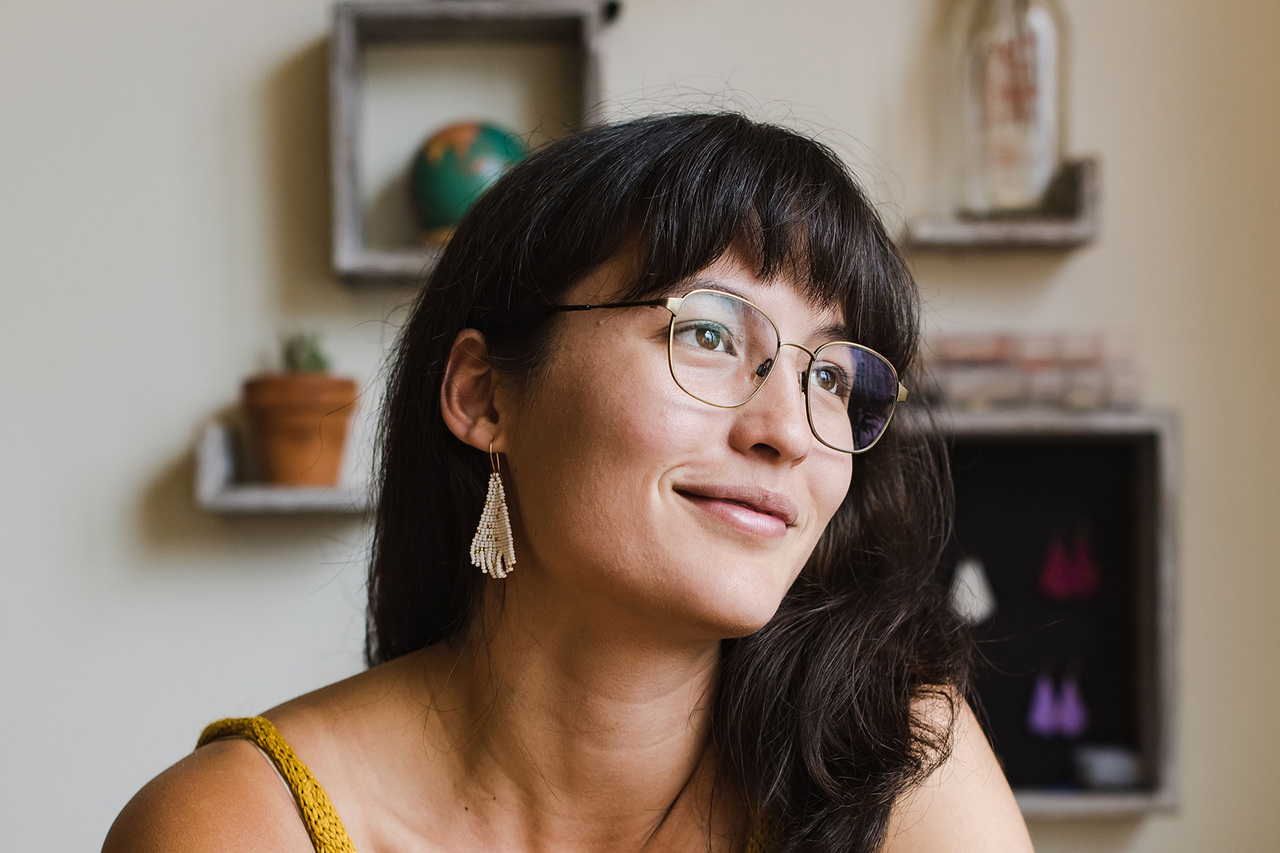
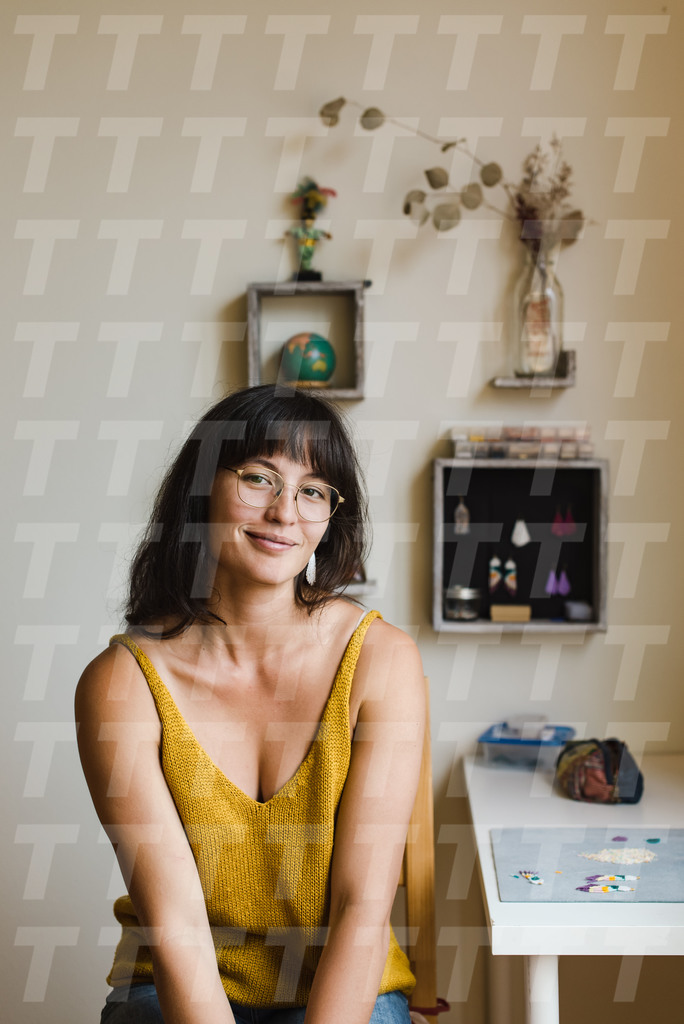
Kataleya Milan is the founder of Kinnari Designs, a jewelry line that creates unique jewelry to honor women. Her main passion is beading data analytics into her designs to spark conversation and action towards greater gender equity and hopes to inspire women to empower each other.
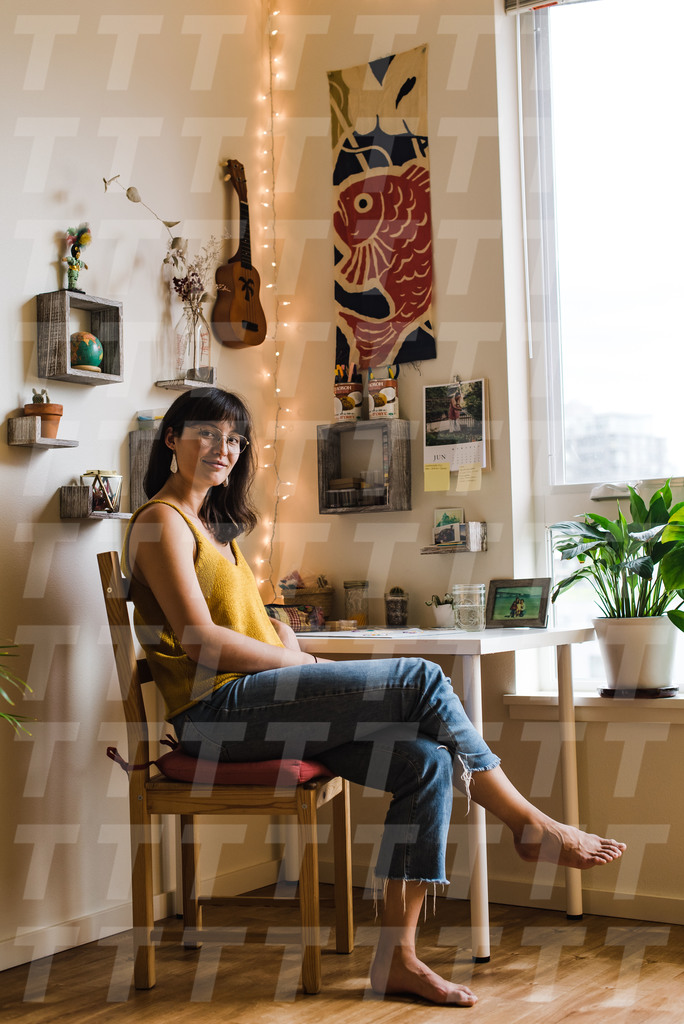
Tell us about your journey from becoming a data analyst to starting Kinnari Designs. What drove you to merge your creative and analytical skills together?
My love for data and visual storytelling began during a summer internship with UNAIDS in Bangkok. The process of sifting and organizing through mass amounts of HIV/AIDS funding data gave me insight into minute details on a topic that I hadn’t had much previous experience with. It granted me a new perspective on HIV/AIDS issues and allowed me to talk and share this global issue with my community, family, and friends.
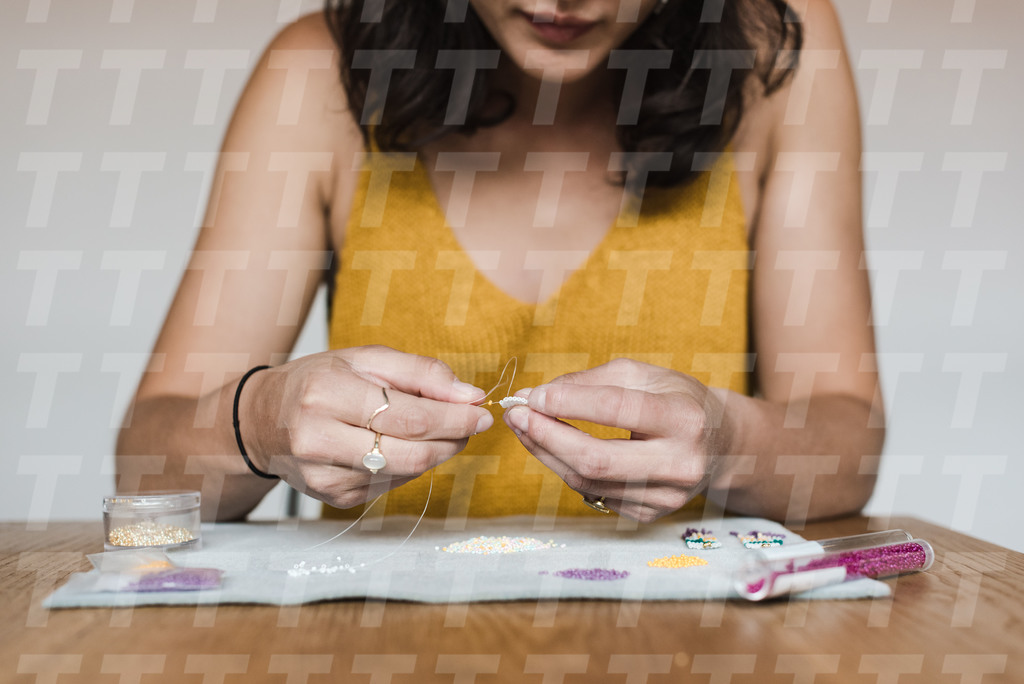
This drove me to search for more analytical jobs that eventually brought me to Nike just over 4 years ago. Most of what we presented was in typical chart forms: bar graph, pie charts, linear trends, etc. Over time, I yearned to represent data in a more creative and artistic way and to highlight issues that mattered to me. One night while scrolling through Instagram, I chanced upon a pair of beautiful beaded earrings and wanted to try my hand at it. As I began to test my own beaded designs, I realized that I could incorporate data and storytelling into these beads. Thankfully, I’ve now shifted to fully focusing all of my energy on building Kinnari Designs.
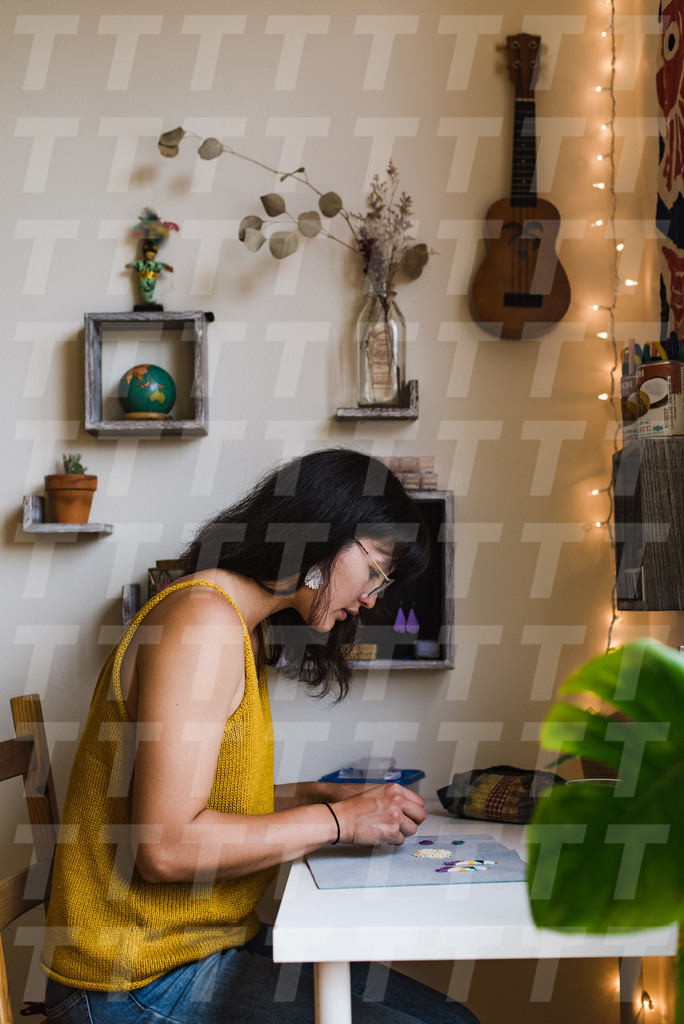
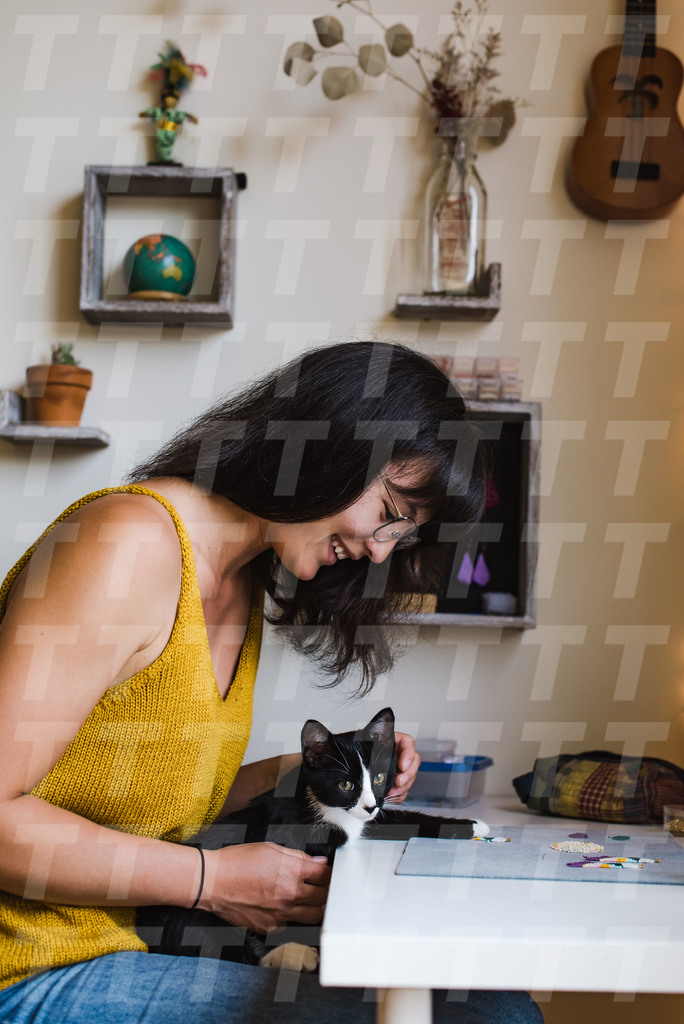
Many of your designs delve into important issues like gender inequity. What is the purpose of featuring these data sets and highlighting them through jewelry?
I’ve found that the majority of people who choose to express themselves through jewelry are those who identify as women. For this reason, it seems right to choose this medium for highlighting issues around gender equity in a unique way. Jewelry is a form of self-expression and is something we can connect with; It’s something you see and wear every day. The next time someone compliments you on your jewelry, I hope that it’s an opportunity to not only say “thank you”, but to also spark conversation as a stepping stone towards concrete action.
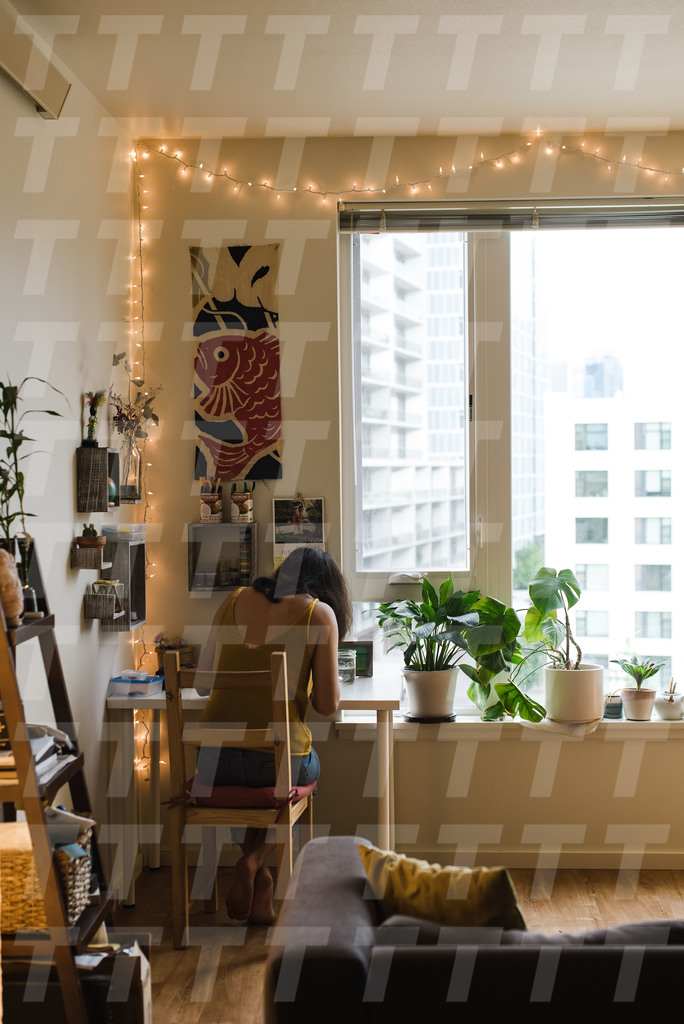
Given the complexity of creating data visualized jewelry, what does the process of creating one earring entail?It varies based on the information available. The very oversimplified version involves four steps: Finding the data, studying the data, experimenting with designs, and creating the final piece. But of course there’s always more hidden within those steps. I’ll use the Stop Sexual Harassment earrings as an example to help describe this process.
1. FINDING THE DATA: It can take hours to search for the data that fits your story and then there’s an extra step to understand whether it’s usable for commercial purposes.

Data sourced from: http://www.stopstreetharassment.org/resources/2018-national-sexual-abuse-report/
2. STUDYING THE DATA: Once you have your data set, now comes organizing it to tell a story. Sometimes this can be straightforward, especially when the data has already been cleansed to a summarized version. But when that isn’t the case, you need to find ways to aggregate data points so that it can be translated visually to a beaded design. For the ‘Stop Sexual Harassment Earrings’, I initially wanted to recreate a Venn diagram but then I realized I couldn’t do that with the nature of this data. The different forms of sexual harassment experienced by women are not mutually exclusive, so all together it would never add back to 100%. I also couldn’t tell whether, for example, someone who had been followed home had also been sexually assaulted. The data was not gathered in a way to show those kinds of overlaps. I realized that to best communicate this story, I needed to instead demonstrate the size, and therefore prevalence, of these sexual harassment experiences through the number of beads.
3. EXPERIMENTING WITH DATA: I first draw my designs by hand, carefully calculating the number of beads needed based on data. Then using some test beads I’ll weave my patterns to see how it actually looks. If I’m lucky, I’ll get this right the first time but more often than not, the experimentation takes multiple tries. With the ‘Stop Sexual Harassment Earrings’, it took me five tries before I found what felt right.
With Trial 1 & 2, I wanted to mix the different bead colors all together. My original intent was for it to represent the idea of when you look at a crowd of women, you do not know what each person may have been through in their life. Any one, and likely multiple, of those women have experienced some form of sexual harassment in their lifetime.


As I started beading these initial designs to see how they rendered physically, I noticed that the percent groups of sexual harassment forms were lost in the mix. I could no longer easily discern the percent of women who were touched without consent or the percent of women who experienced cyber sexual harassment. It became apparent that I needed to keep the color groups separate to properly communicate the story and Trial 3 is when that first appeared. With Trial 3 & 4, I experimented with different shapes but neither of them felt right.


Trial 5 was when I finally put the pencil down. It had the right shape and I loved the way the colors flowed together. It felt like I could finally distinguish the different forms of sexual harassment and how prevalent each of those experiences are. It honored the story that I wanted to tell.


4. CREATING THE FINAL PIECE: This is when I finally get to weave the final beaded design. It is usually my favorite step in the process because I love seeing the final piece come together.
How do you decide which issues to focus on? Are there any data sets you hope to work with in the future?
As my pieces are designed primarily for those who identify as women, I’m currently focusing on gender equity and empowering women. I’ve only been beading for a year or so, and would like to eventually create designs that incorporate stories about the LGBTQ+ community, racial issues, environmental challenges, and more. Combining my love for data and creative expression is my way of speaking out about issues that hit home for me, and to build community around challenges that we’re facing in the world. My goal is to integrate these stories further into our daily consciousness and conservations as the first step of spreading awareness around issues.
What is your background and how has it influenced your artwork?
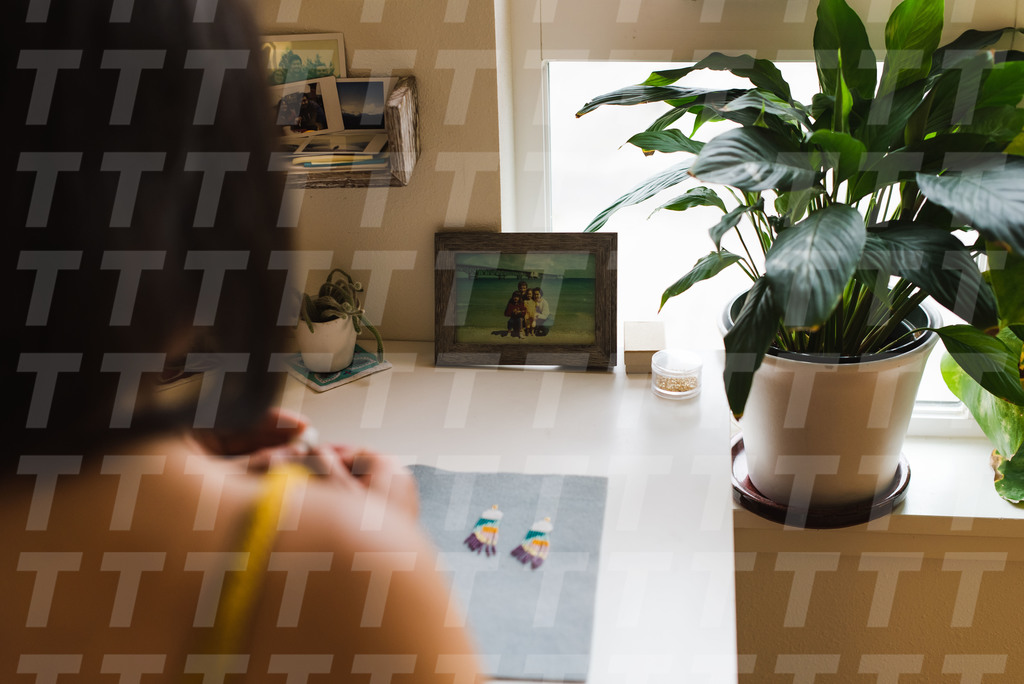
My Thai heritage has played a large role in my artistic journey. As a Thai-American who grew up in the bustling city of Bangkok, I was fortunate to constantly be stimulated and influenced by the rich art, culture, and history of home. From the temples and textiles to food and pottery, it’s impossible not to be inspired by the wealth of colors, patterns, and intricacies abundant in Thai design.
My Thai grandma has also played a part in my drive to create with my hands. She has always done things for herself and would choose to make something she needed over sourcing it from somewhere else. I think I inherited the need to create from her.
Are there any other pieces you’re currently working on that you’re excited to share?
Yes, I am! I've been doing a lot of custom work recently and it brings me so much joy to create something that is unique to a person. I love diving into the history and culture of the muse and weaving those important details into the design. For that reason, I'd love to actually highlight one project that I finished where I truly brought that to life.
The custom design I am most proud of thus far are the 'Nancy Earrings'. These were commissioned by her husband as a surprise. When we first met to talk design, he was also coming in with a blank slate. I started asking about what Nancy is passionate about, what is she proud of, her preferred color schemes and styles, etc. The comment that stuck with me was about Nancy's pride in her Vietnamese culture.
From there, I began looking further into Vietnamese symbols and I landed on recreating an Ao Dai in earring form. I decided to also incorporate yellow Mai flowers that climb up the side of the design. These cheerful flowers are usually seen decorating homes during Tet, the Vietnamese New Year, and they added a nice color pop against the soft sage of the 'dress'. When I unveiled my initial design plan, the reaction was one of genuine surprise and amazement that I had gone beyond what was expected. I was honored and proud to create something unique and meaningful for Nancy.


Yellow Mai Flowers.
Follow, share, and support Kinnari Designs!
Website: Kinnaridesigns.com
Instagram: @Kinnaridesigns
Facebook: Kinnari Designs