TONL x Anomaly: The Changing Faces of Creativity: LA Q&A
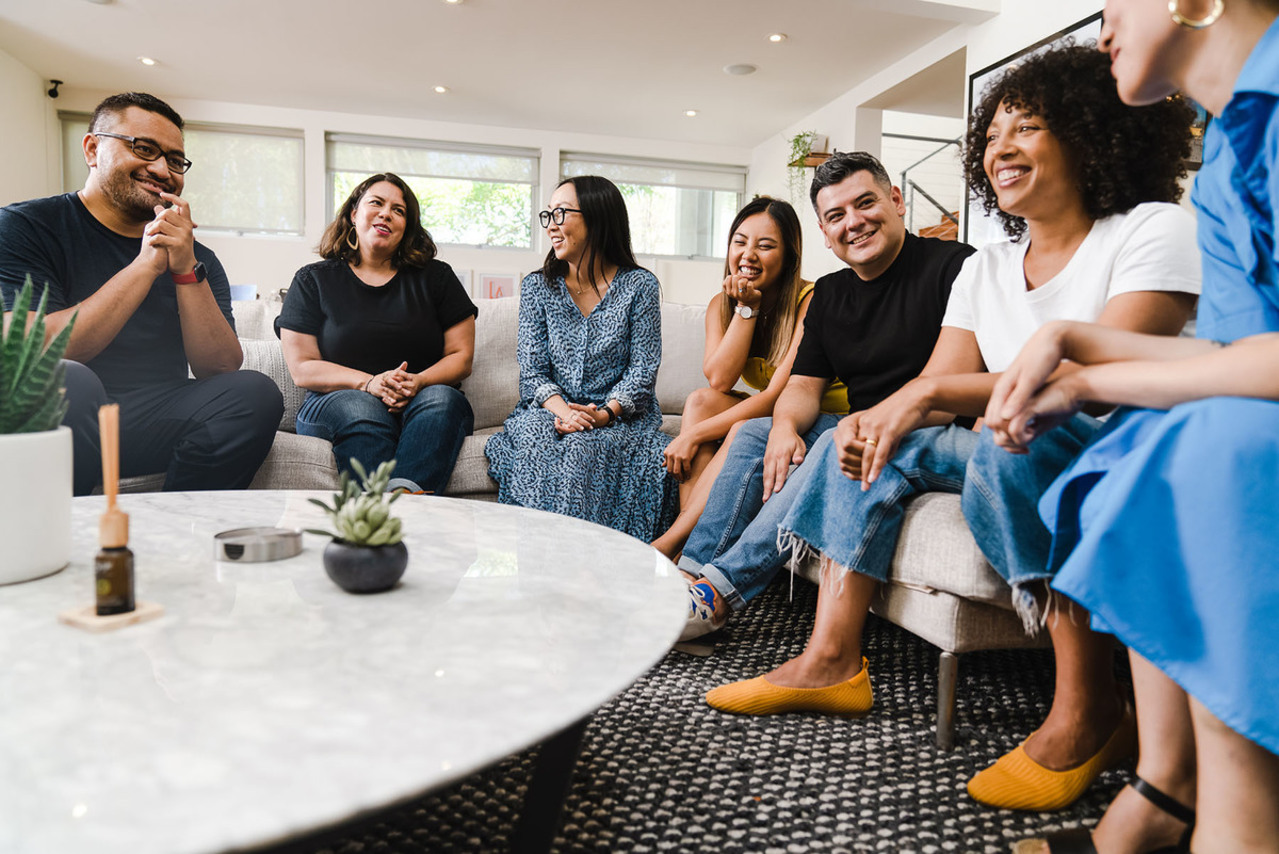
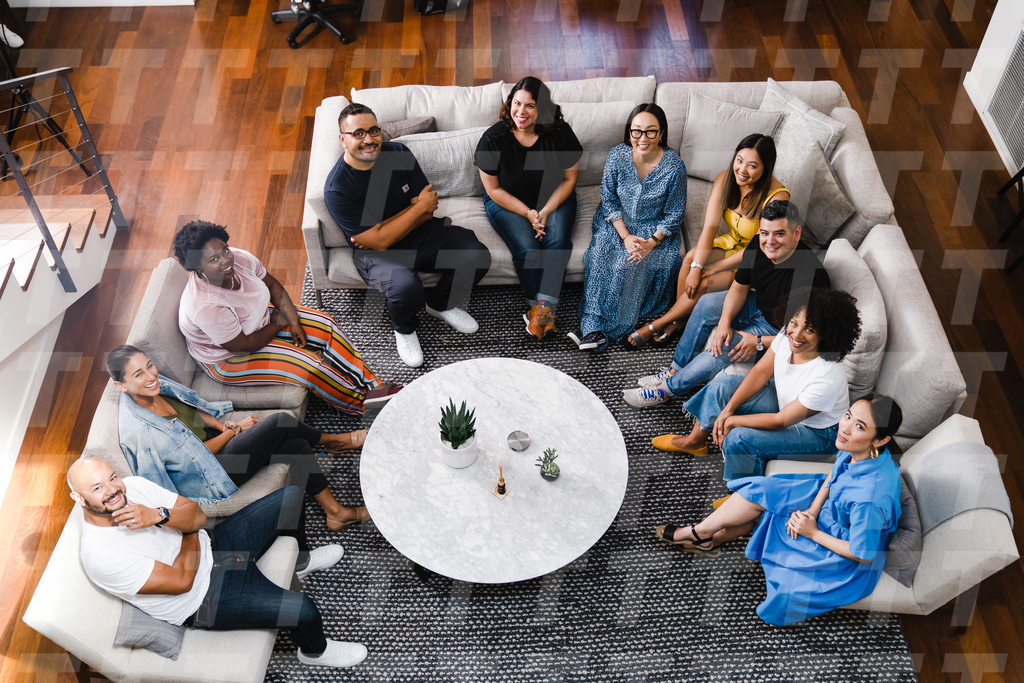
As we continue our Narrative Series: TONL x Anomaly: The Changing Faces of Creativity, today we are sharing the unique stories centered around bringing your authentic self to work, the importance of creating community, the intersections of identities, and inclusion with varying creatives from Anomaly’s LA office. Read below and be sure to read all stories and shop the Narrative below!
Jiah Choi— First generation Korean-American wife. Daughter. Friend. Dog-lover. Boss.
When asked how the industry has changed since she started her career in advertising….
There weren’t a lot of people of color when I was growing up in advertising. I didn’t see people like me— there wasn’t much representation in the workplace or in the actual work being produced. In fact, you didn’t really see it in mainstream media at all either. But today, organizations like ADCOLOR unite and celebrate people of color in our industry and the good work they’re doing. In mainstream media, you’re starting to see more representation in music, film, art. Moments like when Parasite sweeps the film industry by storm is inspiring because it’s evidence of change. Not enough but it’s a baby step. And because representation in culture is changing, clients are demanding to see evidence of that at agencies and in the work we’re making.
When asked how she brings her identity to work…
I don’t look like or sound like the stereotypical CEO, and I’m proud of that. When I walk into a boardroom or when people discover that I’m a CEO, I often get a response of surprise. It used to bother me, but now I kind of get a kick out of it because I know it’s changing their perception.
At a certain age, you get really comfortable with who you are. So it’s easier for me to bring my full self to work. What you see is what you get. Me at work is the same as me at home, with my family or with my friends. Some people have separate work and life personas. I don’t know how to separate the two.
Aisea Laungaue— First-generation Tongan Australian
When asked what changes he’s seen and what changes he’d like to see...
Lots of things have moved forward. I think that there are conversations that we get to have now that we would have had in quiet corners back in the day. I think we still have more work to do because a lot of the critical conversations are still happening in group texts and not necessarily in board rooms. That’s kind of a big mission of mine and Jiah’s [Anomaly LA’s CEO] and Josh’s [Anomaly LA’s CCO] who opened this office because we were those people having side bars. So I think for us there is a responsibility when your experience and your perspective on the world is new to this sort of space. I think I understand the responsibility to make sure that these conversations I’m having in the dark don’t stay there. I think the most positive change is seeing more of those conversations. A change I would like to continue to see is people being more equipped to have difficult conversations. I think people prefer to avoid them or prefer to just wait them out.
Johnny Corpuz— First-generation Filipino Australian
When asked how he feels about having cultural diversity in senior leadership…
The prototypical strategist is a white, super educated British male. In Australia and the US, most of the leadership positions in that particular role and most of the bosses that I have had have been white, British men. Which might not affect you as much if you have a strong personality, you believe in yourself, and you have the imagination and grit to say, “It doesn’t matter what faces are here, I believe that I can be here”— because I am that type of person. But, there are other young people I’ve met that say, “ I can’t imagine myself…I need someone to be there [that looks like me]”, so I think it’s important that we have more people of color in leadership roles especially in Strategy since diversity in teams often leads to better work. I’m proud that our strategy leadership and team here at Anomaly LA looks completely different than the agency world norm.
Ray Zhang— Chinese. Immigrant. Living with Tourettes.
When asked about her identity...
I grew up really proud to be Chinese. I remember I was in India and my history teacher— who I still hold a grudge against to this day— told all the students that the way the Chinese government implemented the one child policy was by having police raid your home to see if you had another kid, then they’d take the kid away, chop them up and feed them to the animals. That’s horrible! I was 14 or 15 and barely spoke English, but I understood everything that she said and I couldn’t come up with a thoughtful, articulate response. I felt like all I could do was say, “No, you’re wrong!” I think that was one of the defining moments that made me strongly identify my nationality with my identity.
When asked about her perspective on diversity….
When it comes to diversity, it feels like it’s gone from 0 to 100 in the past few years. When we talk about diversity, we’re still mostly talking about race which is the one thing that you can see from the outside. But, diversity is so much more than that. People aren’t really talking about class or age.
Cheryl Faux— First-Generation Sierra Leonean. Daughter. Taurus. Dreamer. Optimist.
When asked what words she uses to identify herself...
I view myself as African-American, first-generation. I love my first-generation title and it’s definitely something I wear with pride just because it’s so natural for me to be exposed to my African culture. It was not something that my family was trying to hide or level down. It’s a huge part of who we are – it’s a huge part of who I am. Even when I’m doing job interviews, I always say first generation. In moving around so much, I also call myself a nomad because the way I was brought up has a huge impact on who I am now.
When asked how she brings her identity to work…
I think because I always moved around, I never had to be anyone else but myself. When you move around and you meet so many people and they introduce themselves to you, the only thing you can do is tell them who you are— who you are at that time. It always felt right to just be myself. I have never felt the need to change who I was. Not too many people feel like this when they move around, but I always felt like I could fit in. Everywhere I have gone I have definitely felt that I have been able to fit in and be myself in whatever capacity that was. When I started working in an office setting, I started to realize maybe sometimes I wasn’t actually being myself. When I was interning at this one agency, I was talking to my friend and my boss came up. I spoke to her quickly and when she walked away my friend said, “Omg Cheryl, are you ok? That was so weird – you’re acting so weird.” I was like, “what?” I think from that moment on I realized that whenever I get into corporate places, I feel off. It’s not something I was familiar with growing up. No one in my family was very corporate so I never learned how to vibe with the corporate ways.
Michelle Quach— British born. Mixed race. Human being.

When asked about how she reflects on her identity….
My mother is a white American, my father is African. I consider myself mixed-race because I am a culmination of their ethnicities and cultural experiences. Having the opportunity to live on both continents definitely impacted my perception of identity. In Nigeria, I was not considered African because I was too “light.” In the U.S., where there was once a big emphasis on being lighter-skinned, I was equally ostracized for the shade of my skin— either too light or too dark to be anything. It felt like I had to choose.
Because of this, I’ve realized my experience being mixed race is its own identity which is different from another mixed race persons’ experience. These days I’ve definitely learned to have fun with it [my identity]. Sometimes on forms, I would mark my race as white and have fun seeing their reaction when I showed up. But being mixed race is not an either or category. We are varied in ethnicities and cultural contexts.
Kimia Rahmati— First-generation Iranian American woman.
When asked to expand on her identity….
The way I describe my identity has evolved over time. In the first ten years of my life, my parents weren’t as educated, didn’t speak much English, and I was an only child. As we settled in to the U.S, we started to feel less “Iranian”— made more American friends, adopted the culture and learned how to navigate differences that initially felt confusing or uncomfortable. The way I describe my identity will always be: first-generation Iranian American woman. I think it just feels more American-forward now than it did back then— I spent my 20s in Seattle and San Francisco and now my partner is a white male. So it can be difficult to balance or feel disconnected to the Iranian bits of my identity (which I love) but it reminds me to harness and spend more time with my Iranian people and culture.
When asked about bringing her authentic self to work…
There’s definitely a professional filter that exists when I’m at work. It’s not being inauthentic by any means, but it’s not me when I’m surrounded by my gigantic family. Iranians are super passionate and emotional. We often speak the first thing that comes to mind. When I’m with my Iranian friends and family, I feel those parts of myself come through naturally. I’m a massive overthinker and that feels more prominent at the office— I’m more intentional with how I interact with people. I think through how the way I act or what I say will affect the rest of the conversation.
When asked how she brings her culture to work…
Iranian women take on a lot of responsibility and I see that in how I work. The women in my family think that they can take care of everybody and don’t want to put responsibility on anyone else. I notice myself doing this when I say things like, “It’s fine. I’ll just do it. I can take care of it,” even though I know I should delegate more.
Alex Castro— Mexican American. Latino. Angeleno.
When asked to describe his identity and how he brings it to work…
First and foremost, I identify as an Angeleno. The only other one here is Jiah. A lot of my peers grew up in the Midwest or out of the country and a lot of times I find myself sharing my LA identity with them. Then of course, I’m very close to my Mexican heritage. I’m first-generation— born here, parents are immigrants. Those are the two pillars of my identity. I try to share the parts of LA that most people might not go to or check out. As far as my cultural heritage, I like wearing some of the traditional clothing. We have these things called guayaberas: it’s like a shirt with four pockets and it’s a very traditional thing. [My coworkers] are like “Oh! That’s a cool shirt-tell me about it.” They genuinely want to learn.
Tien Dang— First-gen Vietnamese-American. Texan. Empath.
When asked how important it is to see people she can identify with in the workplace…
One thing I love about the production team here is that it’s mostly women. I ended up in production because I wanted to find a place where I could build community but also experience community— and production is really that. I have so many opportunities to open doors for people who haven’t had opportunities. For example, we are working on an ad and there were some questions about directors and I reached out to my community to get this whole list of directors, cinematographers, gaffers, producers…these people are here and they are ready for jobs! We just need to find a way to connect them.
When asked what her identity means to her...
My identity is myself. Who I have really grown into. This is my definition of diversity too: it’s the culmination of all the defining moments in my life and how I’ve chosen to react. That drives how I view the world. When we open more doors for each other and have space to talk, I think it truly helps the diversity conversations. Of course we need programs, but at the end of the day, what I think I am missing is the community. It’s hard to build when we as people of color are so stuck on figuring out our own personal identities. There are just so many layers to figure out before we can come together as one. That has been a struggle for me because I might not look like the person next to me, but we’re still put into the same bucket of “minority” even though their walk is different than mine.
Mildred Grijalva— First generation Angelena. Guatemalan.
When asked to describe her background…
I was born in LA but moved to Guatemala to attend an American high school from 6th grade until I graduated. During the summer, I was in the states. During the school year, I was in Guatemala. So I really lived a bi-cultural life. It was a pretty big cultural shock going back and forth— there wasn’t even a McD in the town where I lived.
When asked what changes she sees happening in the advertising industry….
Technology has changed the work-life balance. We used to have desk computers so we’d have to stay in the office to get stuff done. Whereas now, we can work from anywhere— so while there’s a certain freedom to that, it also means we’re expected to be available at all times.
There’s also a much younger workforce in higher positions. When I began my career, you had to be in your 30s to have higher management positions but now you see people in their 20’s really handling their stuff - it’s great. And I’m lucky that the people I work with are so smart and strong - regardless of age.
When asked what the difference is between representation as a theory and representation in action….
At a previous agency, I was brought in as part of their growing internal Hispanic marketing department. I had never done Hispanic marketing before and even though I’m a part of that culture, I rarely consumed media in Spanish. But the thought was that it was more important to understand the nuances of the culture. It was an interesting time because from a higher level, the idea was to really create an impactful offering but once I was there, the day to day felt more like we were just ticking off a box. I remember once I was called in for a different brand to see if I saw any issues with the creative work they were presenting, even though I knew nothing of the strategy/brand/audience/etc. They asked, “What would Hispanics think?” I was particularly annoyed that day so I said something like, “I don’t know— we didn’t have our town hall today!” I know there was no malice [in the question], but Hispanics are not a homogeneous group. Just as there’s strategic rationale against gen pop sub-audiences, the same needs to be true for other groups.